Thank you!
An Ooma AirDial Sales Representative will be in touch shortly.
866-839-5810



Get your custom quote.
Let’s talk and see how much you can save with Ooma AirDial.

We’ll follow up within a business day.

We’ll help you analyze whether Ooma AirDial is a good solution for your needs.

A custom quote will be generated.

Generate Your Personalized POTS Line Replacement Business Case
Get the information needed to build your case for POTS replacement. Create a customized business case document that shows how much your organization can expect to save by replacing POTS lines with Ooma AirDial.
Still using POTS lines? See where they still support critical systems.
Check POTS ReadinessCall sales at:
866-902-6765
Replacing POTS lines for compliance. What you need to know
Author: Tonya Hottmann
Key Points:
- Replacing a POTS line with any available connection does not automatically preserve compliance.
- Fire alarms, elevator phones, area-of-refuge systems, emergency phones, and entry systems may have different communication and backup-power requirements.
- The Authority Having Jurisdiction has final approval over the replacement solution in each location.
- Organizations should confirm requirements and provide certification documentation before installation, not after.
When carriers began retiring copper infrastructure, many organizations assumed the solution was straightforward: swap the POTS line for any available alternative and keep the device running. The compliance picture is more complicated than that.
The devices that depend most on POTS lines, including fire alarm panels, elevator emergency phones, area-of-refuge phones, blue-light phones, and building entry systems, are governed by safety codes that specify not just what the device must do but also how it must communicate.
Replacing the line with a non-compliant alternative does not satisfy those codes. It just creates a different kind of compliance problem.
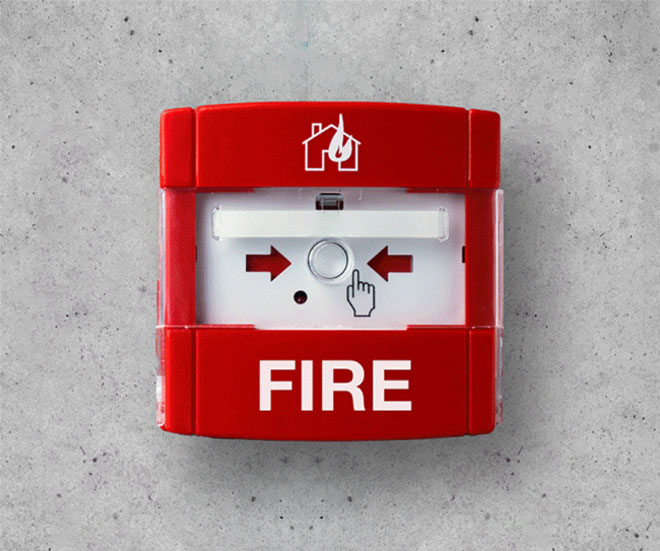
Fire alarm panels: NFPA 72
This is the most demanding compliance requirement in POTS replacement. NFPA 72, the National Fire Alarm and Signaling Code, requires that fire alarm communication paths use a Managed Facilities-based Voice Network. In this managed private network, traffic never traverses the public internet.
This requirement disqualifies standard VoIP solutions, which route traffic over the public internet for at least part of their path.
Beyond the MFVN requirement, the replacement solution must also:
- Provide a loop start interface, which is what the Digital Alarm Communicator Transmitter inside the panel expects.
- Be capable of seizing the line and preventing other use during signal transmission.
- Meet standby power requirements at the premises. Section 26.6.3.13.1.1 of NFPA 72 requires secondary power capacity of at least 8 hours, subject to AHJ approval.
- Be approved by the local Authority Having Jurisdiction, which has final say regardless of national-level certifications.
Commonly referenced credentials: The California State Fire Marshal Building Materials Listing and New York City Fire Department approval are among the most widely recognized credentials AHJs reference when evaluating a POTS replacement for fire alarm use. A solution that holds both may have a clearer path to local approval.
Elevator emergency phones: ASME A17.1
ASME A17.1, the Safety Code for Elevators and Escalators, requires a two-way means of communication in every elevator cab.
The communication system must:
- Connect to a location staffed 24 hours a day, every day of the year.
- Be operable under standby power in the event of a utility outage.
- Transmit the elevator’s physical address with each call to satisfy E-911 requirements.
- Be ADA-accessible, including hands-free operation, an accessible mounting height, and both visual and audio confirmation that the call has connected.
A POTS replacement installed at the demarc via a standard RJ-11 jack that does not change the phone hardware, phone number, or panel configuration avoids triggering a full reinspection in most jurisdictions.
The elevator technician who tests and documents the restored communication path can confirm compliance with the AHJ without requiring a panel replacement.
Area-of-refuge phones: IBC Section 1009
The International Building Code requires two-way communication at areas of refuge, which are locations where people who cannot use stairs wait for evacuation assistance during a fire.
The system must provide both audible and visible signals and must remain operational during a fire event. This means:
- Battery backup sufficient to maintain the communication path during a power outage caused by the fire event itself.
- A reliable communication path that does not depend on the building’s primary internet connection, which may be affected during a fire.
- Documentation for the building’s life-safety inspection file confirming the system meets IBC Section 1009 requirements.
Blue-light and campus emergency phones: Clery Act, ADA, and local codes
The Clery Act requires colleges and universities that receive federal financial aid to maintain emergency notification and response systems, but it does not specify technology requirements.
The compliance documentation, including written emergency response procedures, testing logs, and incident records, is what regulators review.
The ADA governs the physical accessibility of the phones themselves, including hands-free operation, push buttons mounted at an accessible height, and visual and audio confirmation that the call has connected.
A disconnected blue-light phone that appears intact creates both a safety gap and an ADA compliance gap if students with disabilities rely on it.
Local and state codes vary on where emergency phones must be placed and how the communication path must be managed. The Authority Having Jurisdiction for the campus, often the local fire marshal or building inspector, has final authority on what meets code in that jurisdiction.
Building entry systems: ADA, IBC, and AHJ requirements
Building entry and gate access systems are governed primarily by accessibility requirements and building codes rather than a single national safety standard.
The key considerations are:
- ADA compliance. The DOJ enforces ADA requirements for public and commercial facilities, requiring accessible entrances and accessible communication for people with disabilities. The entry system’s intercom or call button must be reachable and operable by individuals with disabilities.
- AHJ approval. State fire marshals and local building inspectors have final authority on whether a replacement communication path meets code in their jurisdiction.
The most important practical point
The AHJ has final say in every jurisdiction. A solution that is certified at the national level still requires local approval.
The organizations with the smoothest transitions are those that bring AHJ documentation to the conversation early, before installation rather than after.
Pre-installation compliance checklist
- Identify every device and system connected to the affected POTS lines.
- Confirm the applicable national, state, and local requirements for each system.
- Review the proposed replacement with the equipment contractor and monitoring provider.
- Gather certifications, listings, backup-power specifications, and technical documentation.
- Provide the documentation to the AHJ before installation.
- Schedule end-to-end testing and retain the results for inspection records.
A POTS replacement that installs at the demarc without altering existing panels or monitoring station receivers and carries the relevant national certifications gives the AHJ the clearest path to approval.
Requesting a pre-installation meeting with the AHJ or providing written documentation of the solution’s certifications before work begins is the single most effective step an organization can take to help ensure the transition does not stall at the inspection stage.