Thank you!
An Ooma AirDial Sales Representative will be in touch shortly.
866-839-5810



Get your custom quote.
Let’s talk and see how much you can save with Ooma AirDial.

We’ll follow up within a business day.

We’ll help you analyze whether Ooma AirDial is a good solution for your needs.

A custom quote will be generated.

Generate Your Personalized POTS Line Replacement Business Case
Get the information needed to build your case for POTS replacement. Create a customized business case document that shows how much your organization can expect to save by replacing POTS lines with Ooma AirDial.
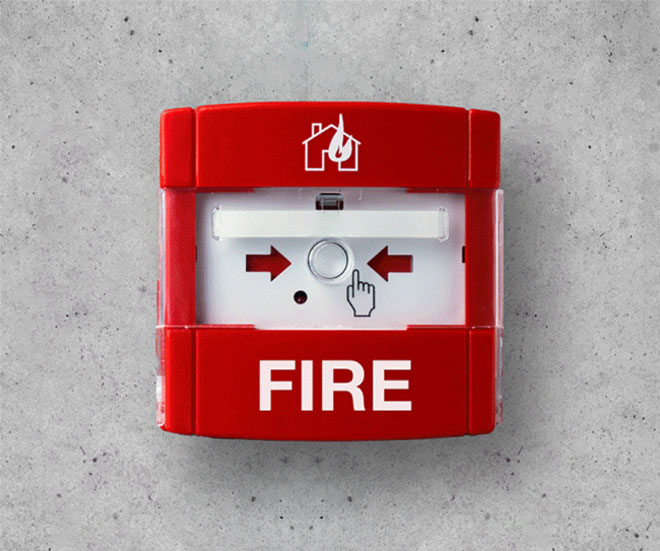
Still using POTS lines? See where they still support critical systems.
Check POTS ReadinessCall sales at:
866-902-6765
What are POTS lines and why are they going away?
Author: Tonya Hottmann
Key Points:
- POTS lines are aging copper connections that still support critical systems such as fire alarms, elevator phones and security equipment.
- Carriers are rapidly retiring copper infrastructure, raising rates and shortening termination notices, with AT&T targeting near-total retirement by 2029.
- Organizations should audit their POTS lines now and transition life-safety systems to compliant, purpose-built replacements before service is discontinued.
For nearly 150 years, a web of copper wire has quietly connected the world’s buildings to the telephone network. Most people never think about it. But as that infrastructure nears the end of its operational life, every building that still depends on it for fire alarms, elevator phones, security systems, and dozens of other critical devices faces an urgent transition it can no longer ignore.
What are POTS lines?
POTS stands for Plain Old Telephone Service, the traditional copper-wire telephone network that has connected homes and businesses for nearly 150 years, dating back to Alexander Graham Bell’s 1876 invention of the telephone.[1]
In simple terms, POTS is the original landline phone service. It relies on dedicated copper wires that run from a local telephone exchange directly to a building, transmitting voice calls as analog electrical signals. Unlike modern communications technologies, POTS does not require an internet connection or cellular network; it operates entirely over the copper telephone infrastructure.
A POTS line has three characteristics that have made it the backbone of critical systems for decades:
- Always on. The copper line itself carries a small electrical current from the telephone exchange, meaning a POTS line can function even during a power outage at the building.
- Analog by design. Voice and signal data are transmitted as continuous electrical waveforms, the same format that fire alarm panels, elevator emergency phones, and security dialers were built to use.
- No internet required. POTS operates as an entirely separate, self-contained network, independent of any broadband or IP infrastructure.
While originally designed for voice calls, POTS lines are still widely used today to support critical systems such as fire alarms, elevator phones, security systems, fax machines, and other essential business equipment. The challenge is that the infrastructure keeping those lines running is being retired.
What’s happening to POTS lines?
For most of the 20th century, the FCC tightly regulated the Public Switched Telephone Network (PSTN), the technical term for the aggregate copper telephone infrastructure, requiring carriers to maintain service availability and keep rates reasonable. That regulatory framework began to erode as digital, fiber, and wireless networks took over most voice traffic.
In 2019, the FCC issued Order 19-72A1, which took effect in August 2022.[2] That order lifted the FCC’s oversight of the PSTN and removed the requirement for carriers to continue offering POTS service. With no regulatory obligation to maintain copper infrastructure, and facing the steep economics of doing so anyway, carriers have significantly accelerated their retirement plans.
The economics are driving the decision
AT&T alone spends approximately $6 billion per year maintaining aging copper infrastructure that fewer than 5% of its customers still use.[3] As customers have migrated to cellular, fiber, and cloud-based communications over the past two decades, that cost has been spread across a steadily shrinking base. The math no longer works.
The result is a cascade of carrier actions that are already underway:
- Rate increases. Without price regulation, carriers have raised POTS line rates dramatically in many markets. Some customers have reported rates exceeding $900 per line per month, compared to $40 to $100 a few years earlier.[4]
- Freeze on new service. AT&T stopped accepting new orders, moves, or changes to copper POTS lines across approximately 1,711 wire centers in 19 states as of October 2025.[5]
- Active decommissioning. AT&T began physically shutting down copper facilities across approximately 500 wire centers in June 2026, the first wave of permanent, irreversible terminations.[5]
- Full retirement by 2029. AT&T has publicly committed to retiring virtually all remaining copper infrastructure by the end of 2029.[6]
“The bottom line is we expect to no longer provide copper-based services across the vast majority of our footprint by the end of 2029.” Susan Johnson, AT&T Head of Wireline Transformation and Supply Chain, December 2023 [6]
The 90-day notice problem
In March 2025, the FCC reduced the required advance notice period before copper line termination from 180 days to just 90 days.[7] For most buildings with fire alarm panels, elevator phones, and other life-safety systems that require licensed contractor involvement, regulatory testing, and AHJ approval, 90 days is not enough time to complete a compliant migration.
The practical implication: organizations that wait for a termination notice before acting are already behind. AT&T and other carriers are not required to help customers migrate; they are only required to notify them that service is ending.
AT&T is not alone
While AT&T’s retirement schedule has received the most public attention, every major carrier is on the same trajectory. Verizon has been aggressively pursuing copper-to-fiber transitions in its markets. Lumen (formerly CenturyLink), Frontier, and Windstream have all taken similar positions. The copper sunset is an industry-wide event, not an AT&T-specific one.
Where are POTS lines?
The most common misconception about POTS lines is that they only power telephone handsets. In reality, most POTS lines still in service today aren’t connected to phones anyone picks up; they silently support critical infrastructure that buildings depend on for safety, security, and compliance.
The expected places
Most facilities managers know that some building systems use phone lines. The most commonly recognized include:
- Fire alarm panels that dial central monitoring stations
- Elevator emergency phones required by ASME A17.1
- Burglar alarms and intrusion detection systems
- Building access control and gate entry systems
- Intercom and entry phone systems
- Pool emergency phones
- Blue light safety phones on campuses
- Medical alert systems in healthcare and senior living
- Fax machines in healthcare, legal, and financial services
- Point-of-sale and credit card processing terminals
- Public safety phones in government buildings and campuses
The places people forget
What surprises most organizations is how far POTS dependencies extend beyond the obvious systems. Copper lines quietly power equipment that no one has thought about in years, often because it has worked reliably without any attention:
- ATMs and cash-dispensing kiosks
- Fuel pump controllers at gas stations
- Parking garage call boxes and intercoms
- Pharmacy and fast food drive-through intercoms
- Vending machines reporting inventory and processing payments
- Irrigation monitoring and control systems
- Traffic signal controllers
- Remote utility monitoring equipment
- HVAC, boiler, and refrigeration monitoring systems
- Tank level and pump station monitors
- Environmental sensors in unattended facilities
The critical implication is that a POTS line audit, a systematic review of every active copper line in a building and what it connects to, almost always surfaces dependencies that facilities managers did not know existed. A building that appears to have three or four phone lines frequently turns out to have eight or twelve when every room and equipment closet is accounted for.
The compliance stakes for life-safety systems
Not all POTS dependencies carry equal urgency. A vending machine losing its reporting connection is an operational inconvenience. A fire alarm panel losing its communication path to a central monitoring station is a compliance emergency.
Under NFPA 72, the National Fire Alarm and Signaling Code, fire alarm systems must communicate via a Managed Facilities-based Voice Network (MFVN). This dedicated managed connection never traverses the public internet.[8] When a POTS line supporting a fire alarm is terminated without a compliant replacement, the panel is classified as impaired. Most jurisdictions require immediate notification to the local Authority Having Jurisdiction (AHJ), mandatory fire watch at $500 to $2,000 per day, and potential building closure until communication is restored.
Similarly, ASME A17.1 requires that every elevator cab have a functioning two-way emergency communication system.[9] When the copper line to an elevator emergency phone is terminated, that elevator is out of compliance. The consequence is typically an elevator shutdown order.
Standard VoIP service, even high-quality business VoIP, does not satisfy MFVN requirements and is not an acceptable replacement for life-safety system communication paths. The replacement must be a purpose-built solution that provides a managed, private communication path independent of the public internet.
Sources
[1] Alexander Graham Bell / POTS history U.S. Patent No. 174,465, filed March 7, 1876. Library of Congress and Smithsonian Institution historical records on Bell’s telephone patent. Widely documented.
[2] FCC Order 19-72A1 FCC WC Docket No. 18-141, Report and Order, FCC 19-72, adopted July 10, 2019, released August 2, 2019. Effective date for key provisions: August 2, 2022. Available at: fcc.gov/document/fcc-modernizes-rules-legacy-voice-services
[3] AT&T copper spend/customer percentage AT&T investor day presentations and earnings calls, 2023–2024. The $6 billion annual figure and <5% customer statistic have been reported in AT&T wireline transformation investor materials and covered by Fierce Telecom and Light Reading. Recommend confirming against specific AT&T Q4 2023 or Q1 2024 earnings call transcript for direct quote.
[4] POTS rate increases / $900 per line Ooma AirDial blog post: ‘How You Could Save Millions with Ooma AirDial.’ Buildings magazine webinar, David Beagle, 2025 (transcript on file). Phoenix Senior Living case study (Ooma.com) citing $849/month per line.
[5] AT&T 1,711 wire centers / 500 decommissioning AT&T FCC filing, WC Docket No. 18-141, filed 2025–2026. Data also referenced in: Ooma blog post ‘AT&T’s Copper Line Shutdown Has Begun‘ (ooma.com/blog/business/att-copper-shutdown-pots-phaseout-2025-2029/) and POTSTracker.com.
[6] AT&T 2029 retirement commitment / Susan Johnson quote AT&T investor event, December 2023. Quote from Susan Johnson, AT&T Head of Wireline Transformation and Supply Chain. Reported by Fierce Telecom, Light Reading, and RCR Wireless, December 2023.
[7] FCC 90-day notice reduction FCC WC Docket No. 18-141 proceeding, order issued March 2025 reducing required advance notice from 180 days to 90 days. Referenced in Ooma blog post ‘AT&T’s Copper Line Shutdown Has Begun.’
[8] NFPA 72 MFVN requirement NFPA 72: National Fire Alarm and Signaling Code, current edition, Section 26.6 (Digital Alarm Communication Transmitters). Available at: nfpa.org. Defines MFVN requirement for fire alarm communication paths.
[9] ASME A17.1 elevator emergency phone requirement ASME A17.1/CSA B44: Safety Code for Elevators and Escalators, current edition, Section 2.27.1.1 (Emergency Communications). Available at: asme.org.