Thank you!
An Ooma AirDial Sales Representative will be in touch shortly.
866-839-5810



Get your custom quote.
Let’s talk and see how much you can save with Ooma AirDial.

We’ll follow up within a business day.

We’ll help you analyze whether Ooma AirDial is a good solution for your needs.

A custom quote will be generated.

Generate Your Personalized POTS Line Replacement Business Case
Get the information needed to build your case for POTS replacement. Create a customized business case document that shows how much your organization can expect to save by replacing POTS lines with Ooma AirDial.
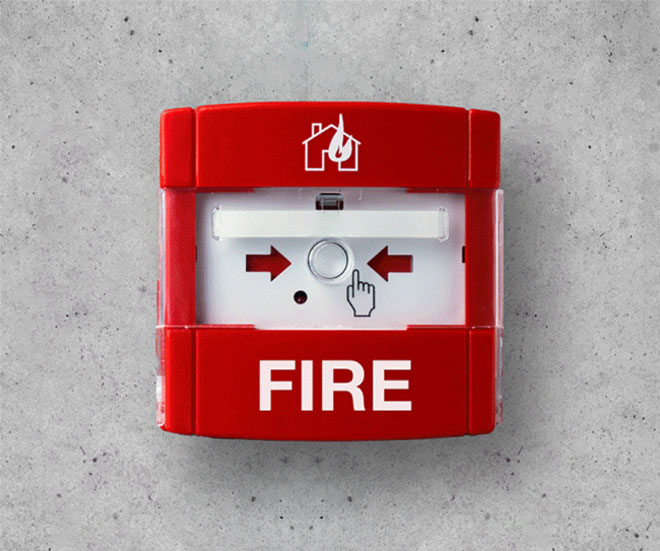
Still using POTS lines? See where they still support critical systems.
Check POTS ReadinessCall sales at:
866-902-6765
What happens when POTS service is no longer available?
Author: Tonya Hottmann
Key Points:
- When a carrier retires a copper line, the service is permanently discontinued—it is not a temporary outage.
- Fire alarms, elevator phones, security systems, fax machines, and other analog devices may lose their communication path.
- Life-safety systems can become impaired, creating compliance, operational, and financial consequences.
- Planning a replacement before service is terminated is significantly easier than responding after the line has been disconnected.
For decades, copper phone lines have been quietly running in the background of buildings across the country. Fire alarms, elevator phones, security systems, fax machines, and dozens of other devices have depended on them without anyone needing to think twice.
That is changing. POTS service is being retired by carriers nationwide, and in some locations it is already gone. Understanding what happens when those lines are no longer available, and what that means for the systems connected to them, is one of the most practical things a building owner or facilities manager can do right now.
1. The lines stop working permanently
This is the most important thing to understand about POTS retirement: it is not a temporary outage. When a carrier decommissions a wire center, the copper lines it serves are terminated permanently.
- There is no restoration process and no path back to copper service once a wire center is decommissioned.
- The carrier is not required to provide an alternative, only to give advance notice.
- Under current FCC rules, that notice can be as short as 90 days.
- Any device or system still connected to that line on the termination date loses its communication path.
Industry trend: AT&T began physically retiring the first wave of wire centers in 2026 and has publicly stated its goal of retiring nearly all remaining copper infrastructure by the end of 2029. Other major carriers are pursuing similar modernization efforts.
2. Fire alarm systems lose their communication path
For many buildings, this is the most significant consequence of a POTS line termination.
Many fire alarm panels use a Digital Alarm Communicator Transmitter (DACT) to communicate with a central monitoring station. When the supporting copper line is retired, that communication path may no longer function.
- An impaired communication path may require immediate action under applicable fire codes and local procedures.
- The Authority Having Jurisdiction (AHJ) may require impairment procedures or other temporary safeguards until communication is restored.
- Annual inspections may identify communication failures, resulting in failed inspections or corrective actions.
- Extended impairments can create operational challenges and additional compliance requirements.
Failure is not always obvious. A fire alarm panel may appear to operate normally while its communication path has been interrupted. The issue is often discovered during routine testing, inspections, or an emergency event.
3. Elevator emergency phones go silent
ASME A17.1 requires elevators to provide a functioning two-way emergency communication system. Many existing installations still rely on copper telephone service.
- When the copper line is terminated, the elevator emergency phone may lose its connection.
- A non-functioning emergency phone may result in inspection deficiencies or corrective actions.
- Depending on local requirements, the elevator may be removed from service until communication is restored.
- An out-of-service elevator can affect building operations, accessibility, and tenant experience.
Like fire alarm systems, elevator phone failures may be silent. The phone may appear normal, but without a working communication path, emergency calls cannot be completed.
4. Security and access systems stop reporting
Security dialers and alarm panels that rely on copper lines face similar risks when the communication path is removed.
- Intrusion alarms, panic buttons, and other signals may no longer reach the monitoring center.
- The monitoring company may not immediately recognize that communications have stopped unless regular supervision or test signals are missed.
- Access control systems that rely on copper connectivity may lose gate or door communication functions.
- Pool phones, blue-light emergency phones, parking garage intercoms, and emergency call stations may also be affected.
An organization may believe its systems remain protected even after communications have silently failed. The issue often comes to light only during an incident, inspection, or routine audit.
5. Fax and other analog services stop working
Organizations that still rely on analog communication services can experience immediate disruption when a POTS line is retired.
- Traditional fax machines stop sending and receiving documents.
- Modem-connected equipment may lose connectivity.
- PBX backup lines may no longer function.
- Environmental monitoring equipment and other analog devices may stop communicating.
6. Compliance and operational consequences add up
When multiple systems lose connectivity at the same time, the operational impact can grow quickly.
- Fire watch requirements may create significant ongoing costs.
- Elevator outages can affect accessibility, occupancy, and day-to-day building operations.
- Security communication failures increase operational risk and potential liability.
- Failed inspections may require corrective actions, documentation, and reinspection.
- Extended life-safety impairments may lead to occupancy restrictions or enforcement actions, depending on local requirements.
None of these outcomes are inevitable. Organizations that plan their transition before copper service is retired typically avoid the disruption associated with emergency replacements.
7. Replacement after termination is harder than before
Replacing a POTS line after it has already been disconnected is often more complicated than planning the transition in advance.
- Emergency procurement leaves less time to evaluate compatible solutions.
- AHJ review and approval may add time to projects involving life-safety systems.
- Reactive projects frequently take longer and create more operational disruption than planned migrations.
A proactive transition typically requires less time, less expense, and fewer operational interruptions.
What to do before it happens to you
If your building still has active copper lines, the most valuable step you can take is identifying exactly what they support before a retirement notice forces an accelerated transition.
POTS transition checklist
- Review carrier invoices and identify every active copper line and associated phone number.
- Trace each line to the device or system it supports.
- Prioritize life-safety systems such as fire alarms and elevator emergency phones.
- Meet with your fire alarm contractor and elevator service provider to discuss transition planning.
- Request your POTS replacement vendor’s certification and AHJ documentation package.
- Create a transition plan before your carrier schedules service termination.
A POTS replacement assessment helps identify every connected system, uncover hidden dependencies, estimate project scope, and build a migration plan that minimizes operational disruption.
When POTS service is no longer available at your location, replacing it is no longer optional. Planning before that day arrives gives your organization more flexibility, fewer surprises, and a much smoother transition.