Thank you!
An Ooma AirDial Sales Representative will be in touch shortly.
866-839-5810



Get your custom quote.
Let’s talk and see how much you can save with Ooma AirDial.

We’ll follow up within a business day.

We’ll help you analyze whether Ooma AirDial is a good solution for your needs.

A custom quote will be generated.

Generate Your Personalized POTS Line Replacement Business Case
Get the information needed to build your case for POTS replacement. Create a customized business case document that shows how much your organization can expect to save by replacing POTS lines with Ooma AirDial.
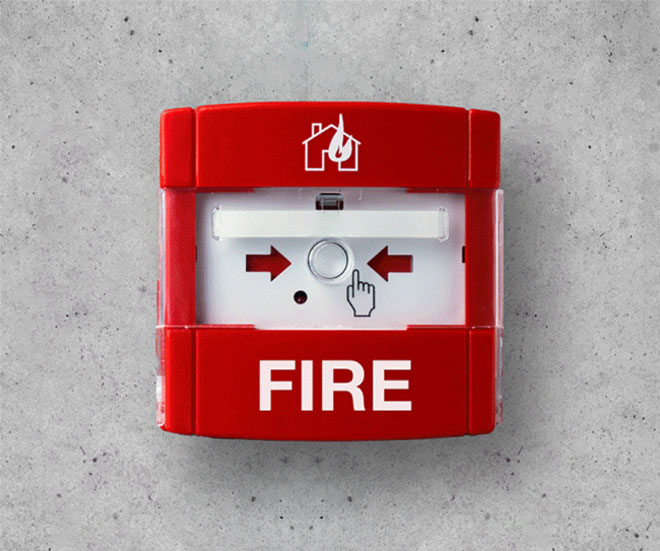
Still using POTS lines? See where they still support critical systems.
Check POTS ReadinessCall sales at:
866-902-6765
What does a copper retirement notice mean?
Author: Kathy Mazza
Key Points:
- A copper retirement notice means your carrier plans to discontinue legacy copper telephone service at your location.
- Fire alarms, elevator phones, security systems, and other critical equipment may lose communication if no replacement is installed.
- Review every phone number listed in the notice and identify which systems depend on those lines.
- Life-safety systems often require contractor coordination, testing, and code compliance before migration.
If you’ve received a letter from AT&T or another carrier about copper retirement, network modernization, or service discontinuance, don’t ignore it. While the terminology varies by carrier, these notices generally communicate the same message: your legacy copper telephone service is scheduled for retirement.
If your building still relies on copper lines for business communications, fire alarm panels, elevator emergency phones, security systems, or other critical equipment, it’s time to begin planning.
What is a copper retirement notice?
A copper retirement notice is a formal communication from your telephone carrier informing you that legacy copper-based telephone service at a specific location is scheduled to be discontinued.
Under current FCC rules, carriers are generally required to provide advance notice before discontinuing certain legacy services. The notice typically identifies the affected service address, telephone numbers, and the planned retirement date, and may describe alternative services offered by the carrier.
This is more than a routine account update. It signals that your existing copper service will not remain available indefinitely.
Why different carriers use different names
Carriers use different terminology—including network modernization, service discontinuance, and copper retirement—to describe the same broader transition away from legacy copper infrastructure.
Regardless of the wording, the practical question remains the same: Which systems in your building still depend on those copper lines, and how will they continue to operate after the retirement date?
What happens if you do nothing?
When the scheduled retirement date arrives, the affected copper service may be disconnected.
The impact depends on what is connected to those lines.
- Business phone lines may stop working.
- Fire alarm panels may lose their communication path to the monitoring station.
- Elevator emergency phones may no longer connect during an emergency.
- Security alarm panels may stop transmitting signals to the monitoring center.
- Building entry systems, gate controllers, fax machines, and other legacy devices may lose connectivity.
Many of these systems continue to appear operational even after the communication path has been lost, making failures difficult to detect until an inspection, routine test, or emergency reveals the problem.
What the notice means in practice
For many business voice applications, replacing a copper line is relatively straightforward.
For life-safety systems, the process is typically more involved.
Fire alarm systems may require coordination with a licensed fire alarm contractor, end-to-end testing, and approval from the AHJ. Elevator emergency phones may require testing by a qualified elevator service provider. Security systems often require coordination with the monitoring company to verify signal transmission after changes to the communication path.
Organizations that begin planning as soon as they receive a retirement notice generally have more flexibility than those that wait until the final weeks before service is discontinued.
Is standard VoIP the right replacement?
It depends on the application.
For many business telephone lines, VoIP or cloud communications are appropriate replacements.
Life-safety applications often have different technical and code requirements. Fire alarm communication paths, for example, should be evaluated with your fire alarm contractor, monitoring provider, and AHJ to ensure that the replacement solution complies with applicable codes and local requirements. Not every VoIP implementation is appropriate for every application.
What should you do right now?
Action checklist
- Review the retirement notice and note the scheduled service date.
- Identify every telephone number listed in the notice and determine what device or system it supports.
- Prioritize fire alarm panels, elevator emergency phones, security systems, and other critical applications.
- Engage the appropriate contractors early so planning, installation, testing, and documentation can be completed before the retirement date.
- Verify that any replacement solution meets the technical and compliance requirements for its intended application.
Choosing the right replacement
Many organizations choose a purpose-built POTS replacement because it preserves existing fire alarm panels, elevator phones, security systems, building entry systems, and other legacy equipment while replacing only the underlying communication path.
Ooma AirDial is designed for this purpose. It installs at the demarcation point using a standard RJ-11 connection, allowing organizations to modernize communications without replacing existing equipment. AirDial supports fire alarm communications through an MFVN-based architecture and includes certifications for fire alarm and elevator applications.