Thank you!
An Ooma AirDial Sales Representative will be in touch shortly.
866-839-5810



Get your custom quote.
Let’s talk and see how much you can save with Ooma AirDial.

We’ll follow up within a business day.

We’ll help you analyze whether Ooma AirDial is a good solution for your needs.

A custom quote will be generated.

Generate Your Personalized POTS Line Replacement Business Case
Get the information needed to build your case for POTS replacement. Create a customized business case document that shows how much your organization can expect to save by replacing POTS lines with Ooma AirDial.
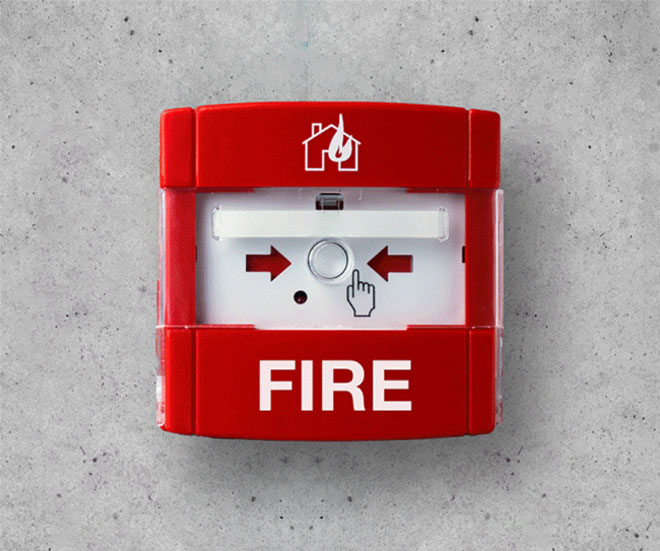
Still using POTS lines? See where they still support critical systems.
Check POTS ReadinessCall sales at:
866-902-6765
Got an AT&T shutdown notice? Here’s what to do next
Author: Tonya Hottmann
Key Points:
- An AT&T shutdown notice means your legacy copper phone service is scheduled for retirement.
- Before replacing anything, identify every device connected to the affected phone lines.
- Fire alarms, elevator phones, security systems, and entry systems often rely on copper lines and may require compliant replacements.
- Planning early gives organizations time to coordinate testing, contractors, and regulatory requirements.
- A POTS readiness assessment can help identify affected lines and create a migration plan before the shutdown date.
Most organizations don’t realize they still depend on copper until an AT&T retirement notice arrives.
By then, the question is no longer whether the lines are going away—it’s what critical systems will stop working when they do.
If you’ve received a letter from AT&T about network modernization, copper retirement, or service discontinuance, the time to act is now. Here’s what the notice means, why it matters, and what you should do next.
What the notice means
An AT&T shutdown notice is a formal notification that legacy copper-based POTS service at a specific address is scheduled for retirement.
The notice typically identifies:
- The telephone numbers affected.
- The service address.
- The planned retirement date.
- Alternative services offered by AT&T.
Why organizations get caught off guard
Receiving the notice usually isn’t the problem.
Getting it to the right person is.
Carrier notices are often sent to the account contact on file—someone in accounting, procurement, IT, or telecommunications—rather than to the facilities or operations team responsible for the systems connected to those lines.
By the time the notice reaches building operations, valuable planning time may already have been lost.
That’s why the first step isn’t replacing phone lines. It’s determining what those lines actually support.
What happens if you do nothing?
When the retirement date arrives, the affected copper service may be disconnected.
What happens next depends entirely on what is connected to those lines.
- Business phone lines may stop working.
- Fire alarm panels may lose their communication path to the monitoring station.
- Elevator emergency phones may no longer connect during an emergency.
- Security alarm panels may stop transmitting signals.
- Building entry systems, gate controllers, and fax machines may experience connectivity issues.
Why the timeline matters
Replacing a standard business phone line is usually straightforward.
Replacing communications for life-safety systems is not.
Fire alarm panels often require contractor coordination, installation, testing, documentation, and AHJ approval. Elevator emergency phones typically require testing by a qualified elevator service provider. Security systems frequently require coordination with the monitoring center before migration is complete.
Waiting until the final weeks before the retirement date leaves little room for planning and increases the risk of delays, compliance issues, and operational disruption.
Before you buy anything
Before making any technology decisions, answer these three questions:
- Which telephone numbers are being retired?
- What device does each number support?
- Which of those devices have compliance or life-safety requirements?
Many organizations assume they are replacing business phone lines only to discover that one of those numbers supports a fire alarm panel, an elevator emergency phone, a security system, or another critical building system.
Understanding your environment should always come before selecting a replacement solution.
A typical scenario
A property manager receives an AT&T retirement notice listing three telephone numbers.
At first glance, they appear to be unused business lines scheduled for replacement.
After tracing each number, the team discovers one serves the fire alarm panel, another the elevator emergency phone, and the third a building entry system.
What looked like a routine telecommunications project quickly becomes a facilities, compliance, and life-safety project.
What to do right now
- Review the notice and record the retirement date.
- Trace every listed telephone number to the device it supports.
- Prioritize fire alarm panels, elevator emergency phones, security systems, and other critical applications.
- Verify that any replacement solution meets the technical and compliance requirements for each application.
- Consider completing a POTS Readiness Assessment to identify affected lines, map them to devices, and develop a migration plan.
The right replacement approach
Purpose-built POTS replacement solutions allow organizations to replace copper service while preserving the devices that depend on it.
Ooma AirDial installs at the demarcation point using a standard RJ-11 connection, allowing existing fire alarm panels, elevator phones, security systems, building entry systems, and other legacy equipment to remain in service. It combines hardware, LTE connectivity, phone service, and support in a single managed solution designed for critical communications.
The bottom line
An AT&T shutdown notice isn’t simply a telecommunications event.
It’s a building infrastructure deadline.
Organizations that understand what their copper lines support can plan the transition on their own schedule, minimize disruption, and protect critical building systems. Those that don’t often discover the importance of those lines only after the connection has already been lost.