Thank you!
An Ooma AirDial Sales Representative will be in touch shortly.
866-839-5810



Get your custom quote.
Let’s talk and see how much you can save with Ooma AirDial.

We’ll follow up within a business day.

We’ll help you analyze whether Ooma AirDial is a good solution for your needs.

A custom quote will be generated.

Generate Your Personalized POTS Line Replacement Business Case
Get the information needed to build your case for POTS replacement. Create a customized business case document that shows how much your organization can expect to save by replacing POTS lines with Ooma AirDial.
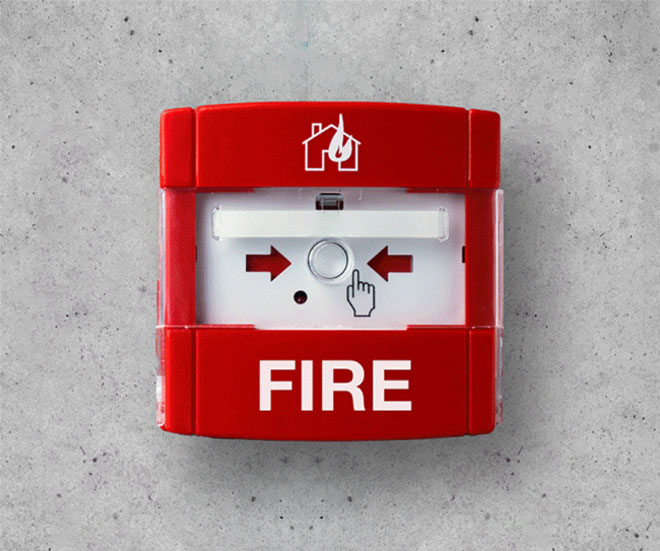
Still using POTS lines? See where they still support critical systems.
Check POTS ReadinessCall sales at:
866-902-6765
Are traditional POTS lines still worth the cost?
Author: Kathy Mazza
Key Points:
- Traditional POTS lines are becoming more expensive as carriers reduce their reliance on legacy copper networks.
- Organizations may experience higher prices, longer repair times and fewer service options as copper infrastructure is retired.
- AT&T plans to discontinue copper-based services across the large majority of its domestic copper network by the end of 2029.
- Life-safety systems require a replacement designed for their technical, monitoring and compliance needs.
- Migrating proactively gives organizations more time to audit lines, coordinate contractors and avoid emergency replacements.
A failed communication inspection doesn’t just mean another repair to schedule. It can affect day-to-day operations, requiring measures such as a fire watch or the removal of an elevator from service until the communication path is restored and the system passes reinspection.
For most organizations, the answer is no. Between rising costs, declining support, and copper retirement plans from major carriers, the case for continuing to pay for traditional POTS lines is becoming increasingly difficult to justify.
Costs have skyrocketed
Traditional copper lines were once a relatively inexpensive way to connect fire alarm panels, elevator emergency phones, fax machines, entry systems, and other analog equipment. That is no longer the case for many organizations.
Regulatory changes and the continuing transition away from legacy copper networks have given carriers more flexibility to discontinue older services and change how those services are priced.
Some businesses have experienced increases of several hundred percent on individual lines. Phoenix Senior Living, for example, documented one fire alarm panel line that reached $849 per month.
Reliability is declining
Carriers are directing more investment toward fiber, wireless, and IP-based networks while reducing their reliance on aging copper infrastructure.
As that transition continues, organizations may encounter longer repair times, fewer technicians with copper expertise, and less predictable support for legacy lines.
Copper was once valued for its reliability, but that advantage becomes harder to defend when the underlying network is no longer a carrier investment priority.
The lines are going away
This is the most definitive part of the decision: traditional copper service will become less available as carriers continue retiring their legacy networks.
AT&T has set a 2029 target
AT&T plans to discontinue copper-based services across the large majority of its domestic copper network by the end of 2029.
Copper retirements are underway
Carriers are filing notices and implementing copper retirements across individual wire centers and service areas.
The transition is industry-wide
Other major carriers are also moving customers from legacy copper infrastructure to fiber, wireless, and IP-based services.
Notice periods may be limited
Once a retirement or discontinuance process begins, affected customers may have limited time to identify and implement a replacement.
The exact timeline will vary by carrier, location, and service. The overall direction, however, is clear: organizations should not assume traditional copper service will remain available indefinitely.
Life-safety systems need the right replacement
Replacing a standard business voice line may be relatively straightforward. Replacing a line connected to a fire alarm panel or elevator emergency phone requires more careful planning.
Consumer or office VoIP services may not provide the supervision, backup power, signaling support, reliability, or managed communication pathway required by the connected system.
For fire alarm panels, the replacement communication method must meet the applicable edition of NFPA 72, local code requirements, monitoring provider specifications, and the expectations of the Authority Having Jurisdiction (AHJ).
Elevator emergency phones may also need to satisfy applicable elevator codes, accessibility requirements, location-identification rules, backup power requirements, and local inspection standards.
Why planning ahead matters
Organizations that migrate before receiving a termination notice have more control over the process.
A planned transition gives your team time to:
- Audit existing lines and identify the device connected to each number.
- Remove inactive lines and unnecessary optional services.
- Confirm technical and compliance requirements.
- Compare replacement options.
- Coordinate contractors, monitoring providers, and inspectors.
- Install and test the new communication path without unnecessary downtime.
Waiting until a line is disconnected can turn a manageable infrastructure project into an operational emergency.
When might keeping a POTS line still make sense?
There may be limited situations in which an organization keeps a traditional line temporarily, such as when a migration is already scheduled, a contract is close to expiration, or a replacement requires additional approval.
Even in those cases, keeping the line should generally be treated as a short-term bridge rather than a long-term strategy.
The bottom line
The question is no longer simply whether a traditional POTS line still works today. Organizations must also consider how much the line costs, how reliably it can be supported, and how long the carrier intends to keep it available.
For most businesses, continuing to invest in traditional copper lines is difficult to justify when purpose-built alternatives can preserve existing analog equipment while replacing the underlying communication path.