Thank you!
An Ooma AirDial Sales Representative will be in touch shortly.
866-839-5810



Get your custom quote.
Let’s talk and see how much you can save with Ooma AirDial.

We’ll follow up within a business day.

We’ll help you analyze whether Ooma AirDial is a good solution for your needs.

A custom quote will be generated.

Generate Your Personalized POTS Line Replacement Business Case
Get the information needed to build your case for POTS replacement. Create a customized business case document that shows how much your organization can expect to save by replacing POTS lines with Ooma AirDial.
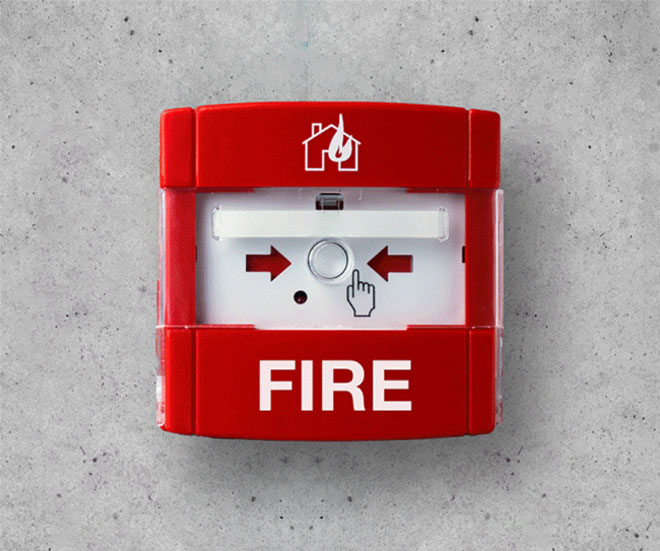
Still using POTS lines? See where they still support critical systems.
Check POTS ReadinessCall sales at:
866-902-6765
My carrier discontinued my landline service. Now what?
Author: Tonya Hottmann
Key Points:
- First determine which devices were connected to the discontinued landline, especially life-safety systems.
- Fire alarms, elevator phones, and security systems should be checked immediately because they may no longer communicate.
- Once a carrier discontinues a copper line, it cannot be restored—it must be replaced.
- Purpose-built POTS replacement solutions allow organizations to keep existing equipment while restoring compliant communications.
- Acting quickly minimizes fire watch costs, compliance risks, and operational disruptions.
Receiving notice that your carrier has discontinued your landline service is a significant moment. For general business phone lines, it is an inconvenience that requires a technology decision. For buildings with fire alarm panels, elevator emergency phones, security systems, or building entry systems on that line, it is an immediate compliance and safety issue that requires a fast, deliberate response.
Step-by-step actions you can take:
Step 1: Identify every device that was on that line
Before anything else, determine what was using the discontinued line. Check your phone bill for the number associated with the terminated service and trace it back to a physical device or location in the building.
The most common POTS-dependent devices include:
- Fire alarm panels — communicate alarm signals to a central monitoring station.
- Elevator emergency phones — connect passengers to a 24-hour monitored location.
- Security alarm panels — dial monitoring centers when an alarm is triggered.
- Building entry and gate systems — allow visitors to contact tenants or security personnel.
- Fax machines — transmit and receive documents using analog phone lines.
Many organizations discover they have more POTS-dependent devices than they realized when they trace a terminated line. Lines that have been in place for 10 to 15 years are often undocumented.
Step 2: Check your life-safety systems immediately
If the discontinued line supported a fire alarm panel, elevator emergency phone, or security alarm, those systems may now be impaired. This should be your highest priority.
- Fire alarm panels. A terminated copper line is classified as an impaired system under NFPA 72. Many jurisdictions require a fire watch costing between $500 and $2,000 per day until communications are restored. Contact your fire alarm monitoring company immediately.
- Elevator emergency phones. A non-functioning elevator emergency phone violates ASME A17.1 and can result in a failed inspection or elevator shutdown. Contact your elevator maintenance provider immediately.
- Security alarm panels. Monitoring centers may silently stop receiving alarm signals even though the alarm panel appears normal. Contact your alarm monitoring company to verify communications.
Step 3: Contact your monitoring company
Regardless of which devices were connected to the discontinued line, notify your monitoring provider immediately. They need to document the communication loss, advise you on next steps, and stop expecting signals that will no longer arrive.
For fire alarm systems, this documentation also helps demonstrate compliance during restoration and future AHJ inspections.
Step 4: Understand that this is a replacement, not a repair
Once a carrier discontinues a landline, it is gone. There is no restoration process, no appeal to the carrier, and no way to reinstate the service. This is not a repair—it requires a replacement solution.
For most devices—including fire alarm panels, elevator phones, entry systems, and security dialers—the appropriate replacement is a purpose-built POTS replacement solution rather than a standard VoIP service.
A purpose-built POTS replacement solution installs at the demarc using a standard RJ-11 connection. Existing equipment, phone numbers, and panel configurations typically remain unchanged while the communication path is restored.
Step 5: Move quickly
The cost of waiting begins accumulating the moment the line is terminated.
- Fire watch often costs between $500 and $2,000 per day until communications are restored and approved by the AHJ. A two-week delay can cost between $7,000 and $28,000 before replacement equipment is even considered.
- Elevator downtime can disrupt tenants, building occupants, and daily operations while creating additional liability exposure.
- Security monitoring gaps begin immediately if alarm signals are no longer reaching the monitoring center.
The sooner a replacement solution is deployed, the sooner these risks and costs stop growing. Many purpose-built POTS replacement solutions can be installed and activated within days when migration begins immediately.
What to do if you have not yet received a notice
If your landlines are still active, now is the best time to begin planning.
Current FCC rules generally require carriers to provide only 90 days’ notice before terminating service. For organizations supporting life-safety systems, that is often not enough time to inventory devices, select a compliant replacement, coordinate licensed contractors, complete testing, and satisfy AHJ requirements.
The bottom line
A discontinued landline is more than the loss of a telephone service. It can interrupt critical building systems that support life safety, security, and regulatory compliance.
By identifying affected devices, verifying life-safety communications, notifying monitoring providers, and implementing a compliant replacement solution quickly, organizations can restore service while minimizing operational, financial, and compliance risks.