Living off the grid doesn’t mean living disconnected
 | May 27, 2026 | 6 min read |
Key Points
- Off-grid living is becoming mainstream among RV travelers, van lifers, remote workers, and retirees seeking flexibility and freedom.
- Reliable cellular service remains a major challenge in rural and remote areas, especially for full-time travelers and seniors.
- Communication is essential infrastructure for telehealth, emergency services, navigation, remote work, and family connection.
- Pairing Starlink with internet-powered phone systems like Ooma Telo helps off-grid households maintain reliable voice communication and peace of mind.
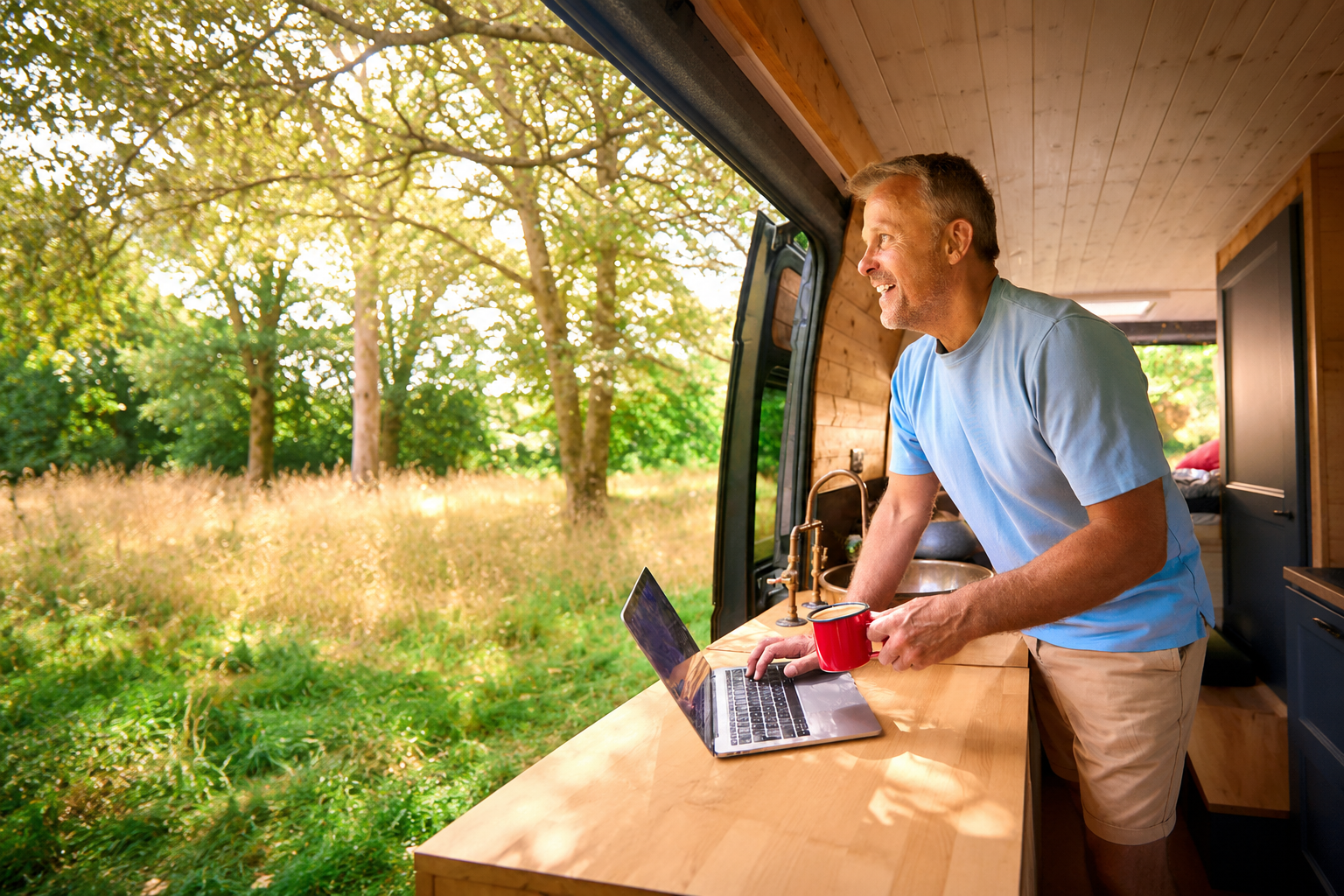
For years, the phrase “living off the grid” meant sacrifice. Limited utilities. Limited infrastructure. Limited communication.
If you chose a remote lifestyle, whether in a cabin, RV, van, marina, or rural community, you accepted that staying connected would be difficult. That assumption is rapidly changing.
Today, millions of Americans are redefining what it means to live off the grid. Retirees are spending entire seasons traveling in RVs and staying in resorts and campgrounds. Families are buying remote vacation cabins and staying for months at a time. Young couples with no kids are buying vans, doing them up and traveling from National Park to National Park. More professionals are working from campsites, boats, and rural properties thanks to flexible remote work policies and modern satellite internet.
But while people may want distance from crowded cities and constant noise, they don’t want isolation. They still want to:
- Call family
- Access telehealth services
- Navigate safely
The modern off-grid lifestyle is no longer about disconnecting from the world entirely. It’s about choosing where and how you live without giving up communication. Communication is no longer just an added convenience, it’s a cornerstone of life. And that shift is changing remote living everywhere.
The off-grid lifestyle is becoming mainstream
What was once considered niche or unconventional has become increasingly common. According to the RV Industry Association, more than 8.1 million American households now own an RV, and another 16.9 million households are interested in purchasing one within the next five years. On top of that, there are 3.1 million people who have embraced van life, which is purchasing a vehicle like a Ford Sprinter or Dodge Ram ProMaster, converting its van space into a livable area and driving that around.
Van life differs from RVs due to their mobility. Because they’re smaller, it’s easier to move and park them around cities, National Parks and more. They’re also more affordable to refuel.
At the same time, rural living has surged since the pandemic. Fannie Mae researchers reported that remote work has increased households’ willingness to relocate farther from urban centers and embrace more flexible living arrangements.
This isn’t just a trend among younger remote workers. Retirees are becoming one of the fastest-growing groups embracing off-grid and semi-off-grid lifestyles, particularly through RV travel and seasonal living communities.
But many people discover the same problem shortly after arriving in a remote destination: Cell service becomes unreliable surprisingly fast.
A campground that looked perfect online may have overloaded Wi-Fi. A mountain cabin may sit in a cellular dead zone. A marina may offer inconsistent coverage once boats move offshore.
For people living off the grid full-time, especially seniors or remote workers, unreliable communication quickly stops feeling inconvenient and starts feeling risky.
The biggest myth about living off the grid
One of the biggest misconceptions about modern remote living is this: “As long as I have a cellphone, I’ll be fine.”
In reality, cellular coverage is often the first thing to become unreliable in remote environments.
In fact, most rural areas lag behind urban areas in coverage and speed. T-Mobile’s highest rate of 5G access in a rural area is 83 percent. It’s highest rate of 5G access in an urban area is 92 percent, according to Ookla. That gap only grows for customers of AT&T and Verizon. Some states like Wyoming see even less 5G access in rural areas, hovering from 9 to 60 percent depending on your carrier.
RV and van travelers frequently encounter congested campground networks and inconsistent tower coverage. Cabin owners and boaters face similar challenges, especially in wooded regions, mountainous terrain, or areas far from infrastructure.
This matters because communication today is tied directly to safety and independence. For many people living off the grid, connectivity now supports:
- Emergency communication
- Telehealth appointments
- Remote work and daily life
In other words, communication is no longer just a convenience layer for remote living. It has become part of the infrastructure.
Why reliable communication matters most for seniors
Few groups illustrate this shift more clearly than retirees and seniors living off the grid.
Many older adults are now embracing seasonal RV travel, remote retirement communities, or rural second homes. But unlike younger travelers, communication needs are often tied more closely to health and safety.
A retired couple spending winters in Arizona may need stable internet access for virtual doctor appointments. A seasonal cabin owner may want dependable phone service during storms or power outages. Adult children may simply want reassurance that parents can be reached easily in an emergency.
The CDC has repeatedly noted that rural residents often face greater healthcare access challenges than urban populations, making communication especially important in remote areas. This includes slower 911 response times than other areas, like waiting 15 minutes or more for emergency services to arrive. For many families, dependable communication has become one of the most important parts of planning a remote lifestyle safely.
How satellite internet changed off-grid living
The real turning point for modern off-grid living has been the rise of satellite internet.
For decades, remote connectivity often meant choosing between unreliable cellular hotspots, expensive legacy satellite services, or slow rural internet.
That equation changed significantly with newer satellite internet platforms like Starlink.
Suddenly, places that once struggled with basic connectivity could support video calls, remote work, streaming, and internet-powered phone service. This has fundamentally changed expectations around remote living.
Van life YouTuber Ryan Twomey showcases how satellite internet has changed remote living in his videos. He can be seen setting up and using Starlink internet to play online video games with his friends, connecting it to his phone as Wi-Fi and using it to watch streaming services. It allows him to stay connected even in areas with poor cellular access, like Death Valley and Yosemite National Park.
For many off-grid households, pairing Starlink internet with systems like Ooma Telo has created a more dependable communication setup. Instead of relying entirely on mobile service, remote residents can use internet-powered home phone service over their Starlink connection, helping them maintain clearer and more reliable communication in remote areas or while traveling.
That combination is becoming increasingly popular among RV travelers, van life enthusiasts, cabin owners, and retirees who want the flexibility of remote living without losing touch with family, emergency services, or everyday communication needs.
Why phone service still matters in an internet-first world
One surprising reality of remote living is that internet access alone isn’t enough. People still want dependable voice communication.
In fact, many travelers and remote residents prefer internet-based phone systems because they allow them to keep familiar phone numbers and use standard home-style phones, even while living far from traditional infrastructure.
This is especially important for seniors, who may not want to rely entirely on mobile devices or inconsistent cellular reception.
Solutions like Ooma Telo work especially well in these environments because they can operate over a Starlink internet connection.
Reliable phone service also provides something less measurable but equally important: peace of mind. Even while living off the grid, people still want the confidence of knowing they can reach family, receive important calls, or contact help when necessary.
What people should consider before living off the grid
The romantic side of off-grid living often gets attention. But the practical side matters just as much. Before moving into a remote lifestyle, it’s worth thinking carefully about communication planning.
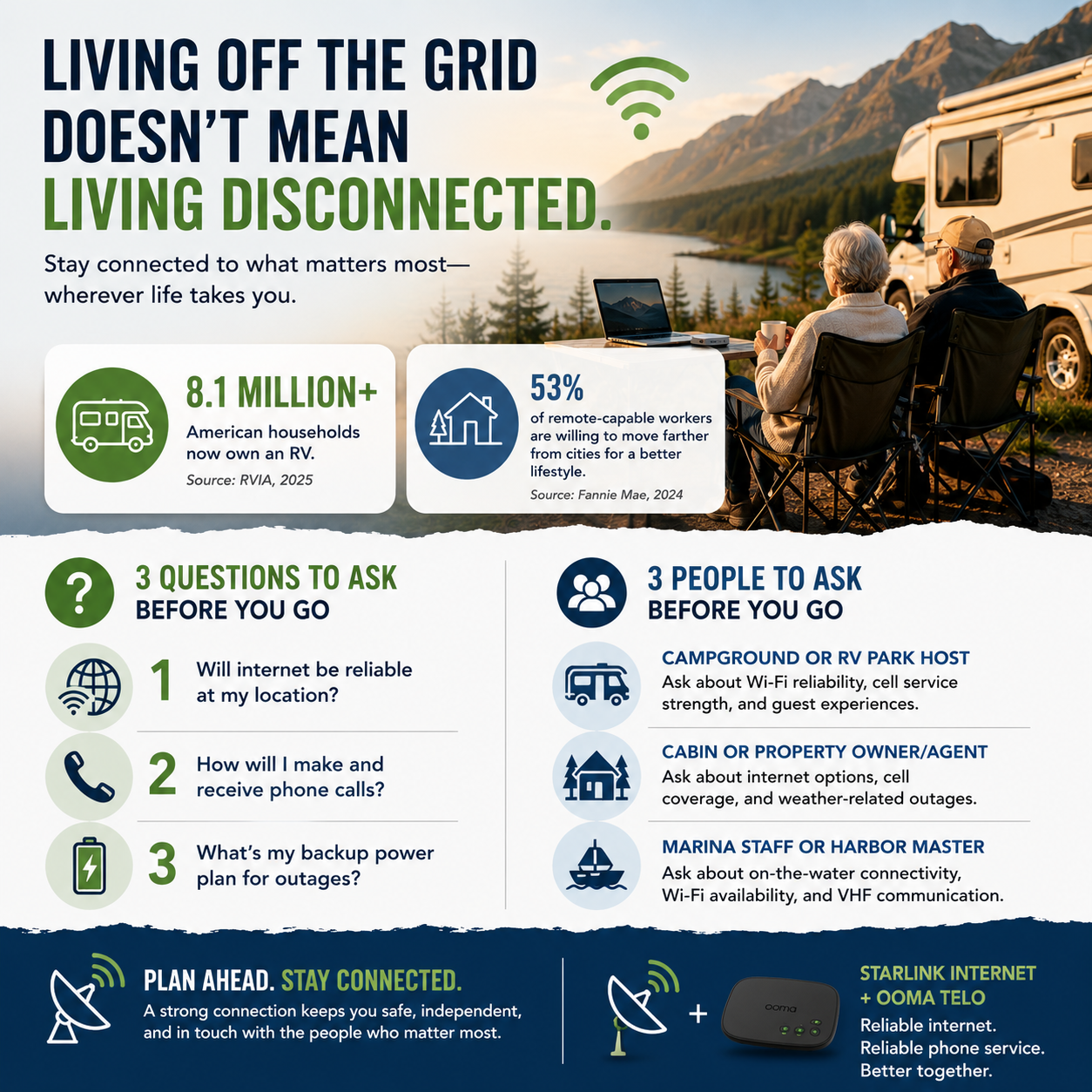
The most successful off-grid setups typically include:
- Reliable internet access
- Backup power solutions
- Dependable phone service
People should also consider how communication needs may change over time. A setup that works for weekend camping may not support full-time RV travel, remote work, or long-term retirement living.
The goal isn’t to recreate city infrastructure everywhere. It’s to create enough reliable connectivity to support safety, independence, and peace of mind.
Off the grid no longer means out of reach
Modern off-grid living is no longer about disconnecting from society. It’s about choosing freedom without sacrificing safety, communication, or independence.
Whether it’s retirees traveling the country in RVs, families escaping to remote cabins, or boaters exploring coastal communities, communication has become one of the foundations of modern remote living.
And as technologies like Starlink and Ooma Telo continue making remote connectivity more practical, more people are discovering that living off the grid no longer means being out of reach.
Husain Sumra is a former journalist who reported on the biggest companies in tech, from Apple to Amazon, covering cloud services, consumer technology and communication solutions. His journalism background has helped him bring a customer-first approach to content marketing, creating pieces of content aimed at helping people.