Copper (POTS) lines are being phased out by carriers, which directly impacts modems that rely on them for communication. As these networks decline, modem connections become less reliable, more expensive, and harder to support.
Modem Connectivity
Resources
Discover how Ooma AirDial® keeps analog modems connected and your critical systems operational as legacy POTS phone lines are retired.
Where analog modem connections are most vulnerable:
Life safety systems can
lose connectivity.
Fire alarms, elevator phones, and other critical systems may be unable to communicate when analog modem connections fail.
Critical alerts may
never be delivered.
Boiler, HVAC, and other monitoring systems can’t send notifications if modem communications are interrupted.
Security systems can
miss alarm events.
Intrusion alarms and other security devices may fail to report critical events when dial-up connections become unreliable.
Access control can stop
communicating.
Gates, entry systems, and remote access devices can lose connectivity, impacting security and daily operations.
Compliance and inspections
are put at risk.
Unreliable modem connectivity can lead to failed inspections and difficulty meeting regulatory requirements.
Business operations can
be disrupted.
Backup payment systems, kiosks, vending machines, and other connected devices may stop transmitting data or transactions.
Replace aging POTS lines without
replacing your modems.
AirDial replaces aging POTS lines while supporting existing analog modems, so there is no need for costly equipment replacement. Gain resilient connectivity with centralized monitoring and proactive alerts.
Every industry runs on systems that can’t afford to lose connectivity.
Commercial Real Estate
Connect critical building systems across every property.
Healthcare
Keep life safety and facility systems communicating.
Retail
Support payments, security, and backup connectivity.
Education
Maintain reliable campus safety communications.
Industrial & Manufacturing
Connect monitoring and production systems reliably.
Parking & Transportation
Support kiosks, gates, and ticketing systems.
Fuel & Convenience Stores
Keep pumps, payments, and security connected.
Property Management
Monitor critical systems across multiple locations.
Financial Services
Support ATMs and legacy transaction systems.
Governing bodies & regulation resources
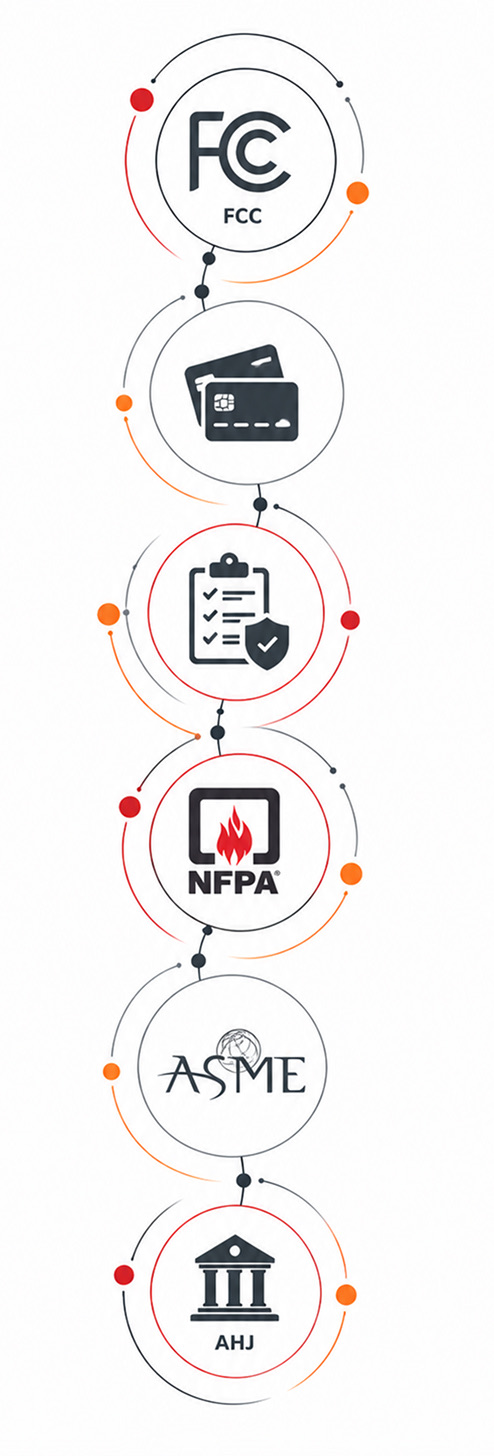
Federal Communications Commission (FCC)
The FCC regulates how communication devices connect to public networks, including those using modem-based transmission. It sets standards for equipment and oversees the retirement of legacy copper infrastructure, directly impacting modem reliability.
Payment Card Industry Security Standards Council (PCI SSC)
PCI SSC defines how payment data must be securely transmitted. Modem-based POS systems must comply with PCI DSS requirements, and legacy connections can increase compliance risk.
Underwriters Laboratories (UL Solutions)
UL certifies the safety and reliability of devices such as alarm panels that rely on modem communication. Reliable signal transmission is required to maintain compliance.
National Fire Protection Association (NFPA)
NFPA sets standards for fire alarm communication, requiring reliable transmission to monitoring centers. Many systems still use modems, making compliance harder as infrastructure declines.
American Society of Mechanical Engineers (ASME)
ASME governs elevator safety, including emergency communication systems. Many rely on modem-based connections that must function at all times.
Authorities Having Jurisdiction (AHJ)
AHJs enforce local building codes and determine whether systems meet safety standards. Failed modem communication can result in failed inspections.
Ooma AirDial Modem Connectivity Resources FAQs
Modems are embedded in many critical systems like fire alarms, elevator phones, and monitoring equipment. These systems have long lifecycles and were built to use dial-up communication, so they are still widely deployed.
When copper lines are degraded or removed, modem-based systems can fail to send signals. This can result in missed alerts, failed inspections, and increased safety or compliance risk.
Not always. Many modem-based systems only communicate during events or tests, so failures may go unnoticed until an emergency or inspection occurs.
Carriers are reducing investment in copper networks, leading to signal degradation, longer repair times, and less consistent service. This impacts modem performance well before full shutdowns occur.
Modem failures can impact safety systems, delay emergency response, disrupt operations, and lead to compliance violations. In some cases, they can also create liability exposure.
Yes. AirDial allows you to keep your modems and existing life and safety devices.
AirDial replaces the copper line by providing a standard analog connection for modem-based devices. It converts those signals to modern networks like LTE and Ethernet, allowing existing systems to continue operating.
No. AirDial is designed to work with existing equipment, so systems continue to operate the same way while the underlying connectivity is upgraded.
AirDial adds redundancy through multiple network paths and removes the single point of failure associated with copper lines. This helps ensure signals are transmitted even if one connection fails.
Yes. By providing more reliable and monitored connectivity, AirDial helps support systems that must meet strict communication requirements for safety and compliance.
Start by identifying where modem-based systems exist and what they support. Understanding your exposure is the first step to reducing risk and planning a transition.