The power of a simple call: How phone calls reduce loneliness in seniors
 | May 5, 2026 | 10 min read |
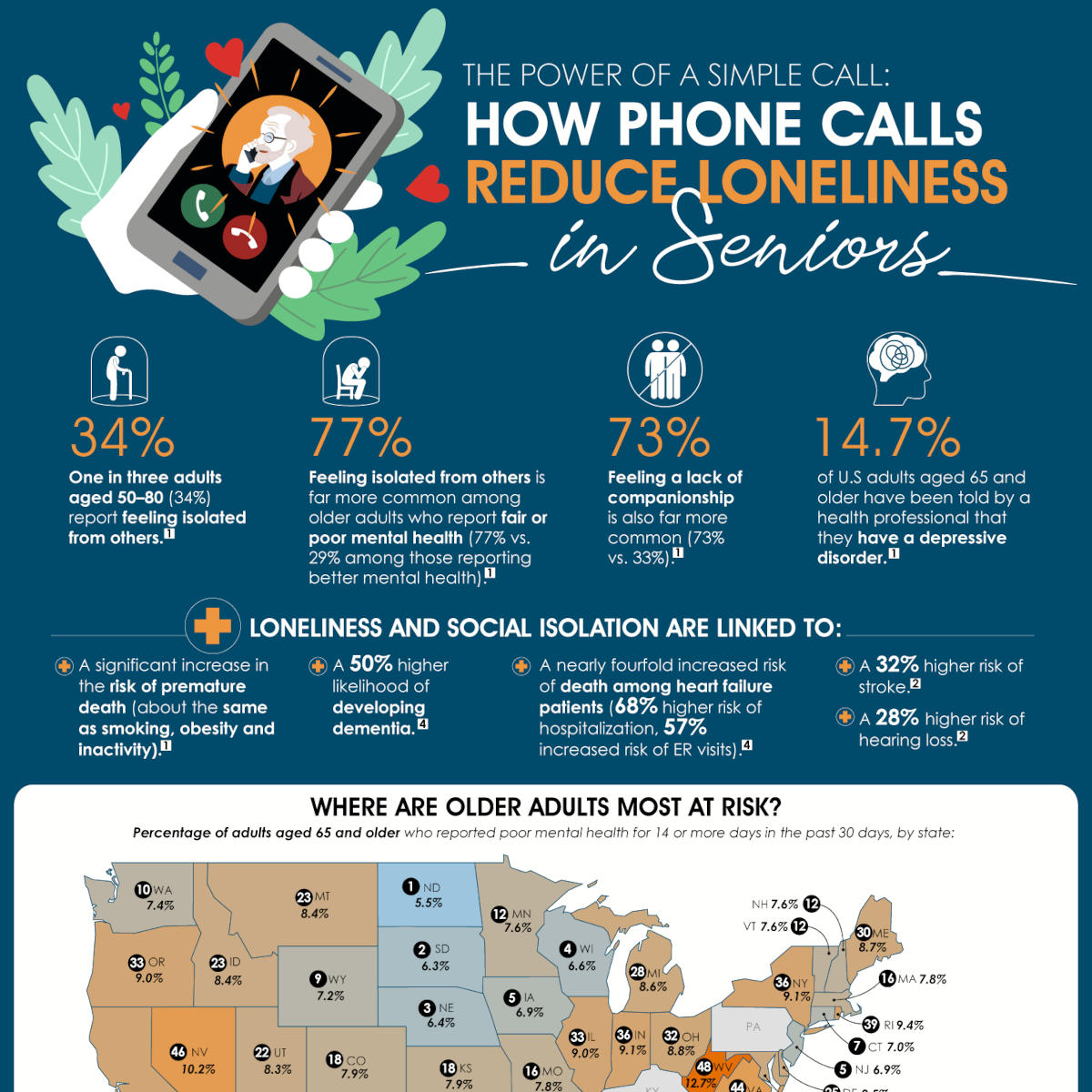
During the initial months of the COVID-19 lockdowns, the world felt much lonelier for many of us. This was especially true for the elderly, a group already at high risk of isolation. During this time, researchers with the University of Texas at Austin called 240 homebound older adults periodically over four weeks. Remarkably, by the end of their study, the researchers found that those who had been experiencing depression before saw their symptoms lessen without any other changes to their routine.
As we age, our social circles often shrink, whether due to family and friends moving away, the deaths of loved ones or declining health. Since humans are such deeply social beings, this isolation can easily result in depression and even worsen physical health and increase mortality.
As simple as it may seem, old-fashioned phone calls seem to be a solution. They require very little technology, yet they can still provide a direct, human connection that all humans need. For this reason, the team at Ooma decided to examine the data on how regular phone calls can reduce loneliness among seniors.
Understanding senior loneliness statistics
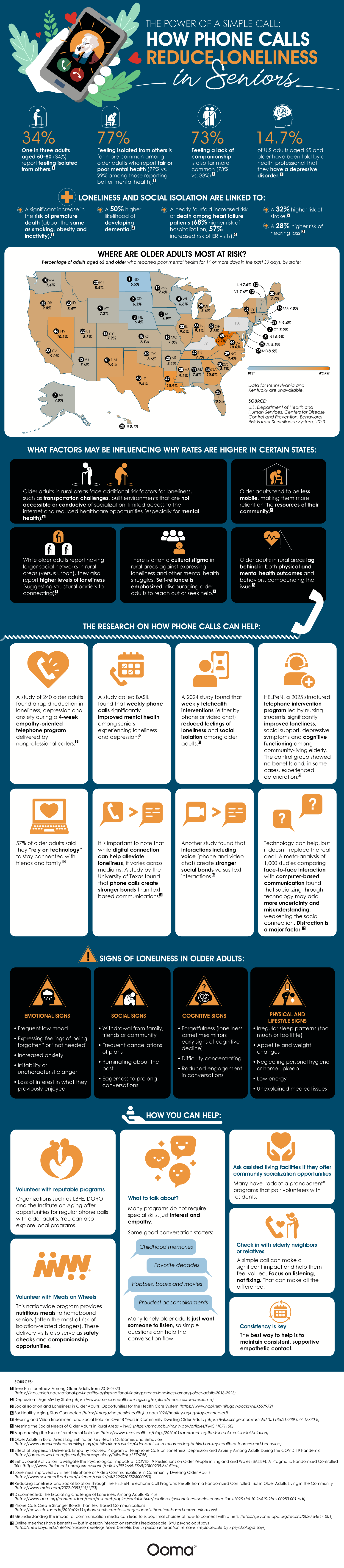
Senior loneliness is more common than many realize. One in three adults between the ages of 50 and 80 report feeling isolated from others, and this number rises sharply among those already struggling with mental health issues. In fact, 77 percent of those with poor mental health report feeling isolated.
In the United States alone, nearly 15 percent of adults ages 65 and older have been diagnosed with a depressive disorder by a health professional, and the implications are severe. As it turns out, there is a clear link between emotional well-being and physical health.
The physical and mental toll of solitude
The physical effects of social isolation on older adults go well beyond mild sadness and worsen the longer the solitude continues. For example, the risk of premature death increases significantly, rivaling the risks of smoking, obesity and physical inactivity. Heart failure patients face a nearly fourfold increased risk of death along with a 68 percent higher risk of hospitalization and a 57 percent increased risk of emergency room visits. Additionally, physiological risks include a 32 percent higher likelihood of having a stroke and a 28 percent greater risk of hearing loss.
Of course, the consequences extend beyond physical health. Cognitive health also suffers dramatically, as socially isolated individuals have a 50 percent higher likelihood of developing dementia.
Why are some seniors more at risk?
Not all older adults experience loneliness in the same way. Geography, mobility, and access to resources all play a role. Seniors living in rural areas, for instance, often face unique challenges, such as limited transportation options that make visits with loved ones more difficult and unreliable internet access that reduces opportunities for digital connection.
There is also a cultural layer to consider. In some communities, mental health struggles are stigmatized, making it difficult for older adults to express feelings of loneliness or ask for support openly.
Physical health and mobility are another key factor. As people age and develop more physical limitations, it can be much harder to maintain social connections outside the home.
Recognizing the warning signs
Recognizing the problem early requires knowing the specific signs of loneliness in seniors. Emotional indicators are usually the first things you’ll notice. A senior at risk may more frequently have low moods, increased anxiety or uncharacteristic anger. They might also express feelings of being forgotten or suddenly lose interest in activities they previously enjoyed.
Social signs include withdrawing from family and friends, frequently canceling plans, ruminating excessively about the past or showing an eagerness to prolong conversations. Cognitive signs can be particularly alarming because loneliness sometimes mirrors early signs of cognitive decline, manifesting as forgetfulness, difficulty concentrating or reduced engagement in conversations. Physical and lifestyle changes are somewhat easier to spot: Look for irregular sleep patterns, sudden changes in appetite or weight, low energy, neglected personal hygiene and unexplained medical issues.
When the signs are so alarming, it might seem like the solution calls for a massive intervention. While real, face-to-face interaction is always best, the data clearly demonstrates how phone calls can help seniors experiencing loneliness.
Would regular phone calls help someone with dementia?
Phone calls are not a cure for dementia, but they can still help individuals with this condition.
Although most research has focused on helping to prevent cognitive decline and conditions like dementia, regular conversations provide structure and familiarity, both of which help support cognitive health in dementia patients. Additionally, as people with dementia are at increased risk of social isolation from family and friends, it’s even more important for them to maintain relationships in any way they can.
How to help lonely seniors
If you want to learn how to volunteer for the elderly, start by researching reputable programs. Organizations like Little Brothers — Friends of the Elderly (LBFE), DOROT, and the Institute on Aging offer structured opportunities to make regular calls. You can also contact local assisted living facilities to inquire about adopt-a-grandparent programs. And volunteering with Meals on Wheels provides seniors with nutritious food while also serving as a crucial safety check and a source of companionship for homebound individuals.
Many programs do not require any special skills, just a genuine interest in listening to others. You might try conversation-starters about childhood memories, favorite decades, hobbies or their proudest accomplishments. Many lonely older adults simply want someone to listen to them, so open-ended questions provide a way for them to share their stories. Most importantly, remember that consistency is the key. Regular, supportive contact helps build a trusting, lasting relationship.
At its core, addressing senior social isolation is a simple matter of connection. Technology will continue to advance and provide new communication methods, but the importance of a phone call remains unmatched.
Fortunately, Ooma provides reliable, crystal-clear VoIP home phone service in a senior phone bundle to ensure those vital conversations happen without interruption. Contact us today to learn more about how our communication solutions can keep you and your loved ones connected.
The data:
- One in three adults ages 50–80 (34 percent) report feeling isolated from others.1
- Feeling isolated from others is far more common among older adults who report fair or poor mental health (77 percent vs. 29 percent among those reporting better mental health).1
- Feeling a lack of companionship is also far more common (73 percent vs. 33 percent).1
- In the U.S., 14.7 percent of adults aged 65 and older have been told by a health professional that they have a depressive disorder.1
Loneliness and social isolation are linked to:
- A significant increase in the risk of premature death (about the same as smoking, obesity, and inactivity).1
- A 50 percent higher likelihood of developing dementia.4
- A nearly fourfold increased risk of death among heart failure patients (68 percent higher risk of hospitalization, 57 percent increased risk of ER visits).4
- A 32 percent higher risk of stroke.2
- A 28 percent higher risk of hearing loss.2
Percentage of adults ages 65 and older who reported poor mental health for 14 or more days in the past 30 days, by state:
- North Dakota: 5.5 percent
- South Dakota: 6.3 percent
- Nebraska: 6.4 percent
- Wisconsin: 6.6 percent
- Iowa: 6.9 percent
- New Jersey: 6.9 percent
- Alaska: 7.0 percent
- Connecticut: 7.0 percent
- Wyoming: 7.2 percent
- Washington: 7.4 percent
- Alabama: 7.5 percent
- Arizona: 7.6 percent
- Minnesota: 7.6 percent
- New Hampshire: 7.6 percent
- Vermont: 7.6 percent
- Massachusetts: 7.8 percent
- Missouri: 7.8 percent
- Colorado: 7.9 percent
- Kansas: 7.9 percent
- Arkansas: 8.1 percent
- Hawaii: 8.1 percent
- Utah: 8.3 percent
- Idaho: 8.4 percent
- Montana: 8.4 percent
- Delaware: 8.5 percent
- Florida: 8.5 percent
- Maryland: 8.5 percent
- Michigan: 8.6 percent
- Oklahoma: 8.6 percent
- Maine: 8.7 percent
- South Carolina: 8.7 percent
- Ohio: 8.8 percent
- California: 9.0 percent
- Illinois: 9.0 percent
- Oregon: 9.0 percent
- Indiana: 9.1 percent
- New York: 9.1 percent
- Mississippi: 9.2 percent
- North Carolina: 9.4 percent
- Rhode Island: 9.4 percent
- New Mexico: 9.6 percent
- Tennessee: 9.7 percent
- Texas: 9.8 percent
- Georgia: 10.0 percent
- Virginia: 10.0 percent
- Nevada: 10.2 percent
- Louisiana: 10.9 percent
- West Virginia: 12.7 percent
Data for Pennsylvania and Kentucky are unavailable.
Source:
U.S. Department of Health and Human Services, Centers for Disease Control and Prevention, Behavioral Risk Factor Surveillance System, 2023
What factors may be influencing why rates are higher in certain states?
Statistics
- Older adults in rural areas face additional risk factors for loneliness, such as transportation challenges, built environments that are not accessible or conducive of socialization, limited access to the internet, and reduced healthcare opportunities (especially for mental health).6
- Older adults tend to be less mobile, making them more reliant on the resources of their community.6
- While older adults report having larger social networks in rural areas (versus urban), they also report higher levels of loneliness (suggesting structural barriers to connecting).6
- There is often a cultural stigma in rural areas against expressing loneliness and other mental health struggles. Self-reliance is emphasized, discouraging older adults from reaching out or seeking help.7
- Older adults in rural areas lag behind in both physical and mental health outcomes and behaviors, compounding the issue.8
The research on how phone calls can help
- A study of 240 older adults found a rapid reduction in loneliness, depression and anxiety during a four-week empathy-oriented telephone program delivered by nonprofessional callers.9
- A study called BASIL found that weekly phone calls significantly improved mental health among seniors experiencing loneliness and depression.10
- A 2024 study found that weekly telehealth interventions (either by phone or video chat) reduced feelings of loneliness and social isolation among older adults.11
- HELPeN, a 2025 structured telephone intervention program led by nursing students, significantly improved loneliness, social support, depressive symptoms and cognitive functioning among community-living elderly. The control group showed no benefits and, in some cases, experienced deterioration.12
- Fifty-seven percent of older adults said they rely on technology to stay connected with friends and family.13
- It is important to note that while digital connection can help alleviate loneliness, it varies across mediums. A study by the University of Texas found that phone calls create stronger bonds than text-based communications.14
- Another study found that interactions including voice (phone and video chat) create stronger social bonds versus text interactions.15
- Technology can help, but it doesn’t replace the real deal. A meta-analysis of 1,000 studies comparing face-to-face interaction with computer-based communication found that socializing through technology may add more uncertainty and misunderstanding, weakening the social connection. Distraction is a major factor.16
Signs of loneliness in older adults
Social Signs
- Withdrawal from family, friends or community
- Frequent cancellations of plans
- Ruminating about the past
- Eagerness to prolong conversations
Cognitive signs
- Forgetfulness (loneliness sometimes mirrors early signs of cognitive decline)
- Difficulty concentrating
- Reduced engagement in conversations
Physical and lifestyle signs
- Irregular sleep patterns (too much or too little)
- Appetite and weight changes
- Neglecting personal hygiene or home upkeep
- Low energy
- Unexplained medical issues
How you can help
| Actions | Additional information |
|---|---|
| Volunteer with reputable programs | Organizations such as LBFE, DOROT, and the Institute on Aging offer opportunities for regular phone calls with older adults. You can also explore local programs. |
| Ask assisted living facilities if they offer community socialization opportunities | Many have “adopt-a-grandparent” programs that pair volunteers with residents. |
| Volunteer with Meals on Wheels | This nationwide program provides nutritious meals to homebound seniors (often the most at risk of isolation-related dangers). These delivery visits also serve as safety checks and companionship opportunities. |
| Check in with elderly neighbors or relatives | A simple call can make a significant impact and help them feel valued. Focus on listening, not fixing. That can make all the difference. |
Sources:
- Trends in Loneliness Among Older Adults from 2018–2023
- Depression – Age 65+ by State
- Social Isolation and Loneliness in Older Adults: Opportunities for the Health Care System
- For Healthy Aging, Stay Connected
- Hearing and Vision Impairment and Social Isolation Over 8 Years in Community-Dwelling Older Adults
- Meeting the Social Needs of Older Adults in Rural Areas – PMC
- Approaching the issue of rural social isolation
- Older Adults in Rural Areas Lag Behind on Key Health Outcomes and Behaviors
- Effect of Layperson-Delivered, Empathy-Focused Program of Telephone Calls on Loneliness, Depression, and Anxiety Among Adults During the COVID-19 Pandemic
- Behavioural Activation to Mitigate the Psychological Impacts of COVID-19 Restrictions on Older People in England and Wales (BASIL+): A Pragmatic Randomised Controlled Trial
- Loneliness Improved by Either Telephone or Video Communications in Community-Dwelling Older Adults
- Reducing Loneliness and Social Isolation Through the HELPeN Telephone-Call Program: Results from a Randomized Controlled Trial in Older Adults Living in the Community
- Disconnected: The Escalating Challenge of Loneliness Among Adults 45-Plus
- Phone Calls Create Stronger Bonds Than Text-Based Communications
- Misunderstanding the impact of communication media can lead to suboptimal choices of how to connect with others
- Online meetings have benefits — but in-person interaction remains irreplaceable, BYU psychologist says
Husain Sumra is a former journalist who reported on the biggest companies in tech, from Apple to Amazon, covering cloud services, consumer technology and communication solutions. His journalism background has helped him bring a customer-first approach to content marketing, creating pieces of content aimed at helping people.