Why landline phone bills are so expensive in 2026
 | May 21, 2026 | 7 min read |
Key Points
- Landline bills often cost more than advertised after taxes, regulatory fees, equipment charges, and long-distance costs.
- Aging copper-wire infrastructure and fewer landline customers are pushing traditional phone costs higher.
- VoIP home phone service uses an internet connection instead of copper lines and can reduce recurring monthly costs.
Traditional home phone service may seem simple, but many households are surprised by how expensive landline bills have become. While advertised prices may appear affordable, the actual monthly cost of a traditional landline often rises significantly after taxes, equipment fees, regulatory charges, and service add-ons are included.
Axios reported in 2025 that some customers were still paying roughly $80 per month for traditional copper-based landline service before switching to modern alternatives. Meanwhile, internet-based home phone alternatives such as VoIP (Voice over Internet Protocol) can often reduce those monthly costs substantially.
If you’re wondering why landline costs keep increasing — and whether there’s a more affordable alternative — this guide explains what’s driving those costs, why consumers are paying the price, and what options are available today.
What Is a Traditional Landline?
A traditional landline phone uses copper telephone wires connected through the public switched telephone network (PSTN), also known as Plain Old Telephone Service (POTS).
For decades, this was the standard way homes received phone service. But as more households rely on cell phones and internet-based communication, maintaining those older copper-wire networks has become increasingly expensive for telecom providers.
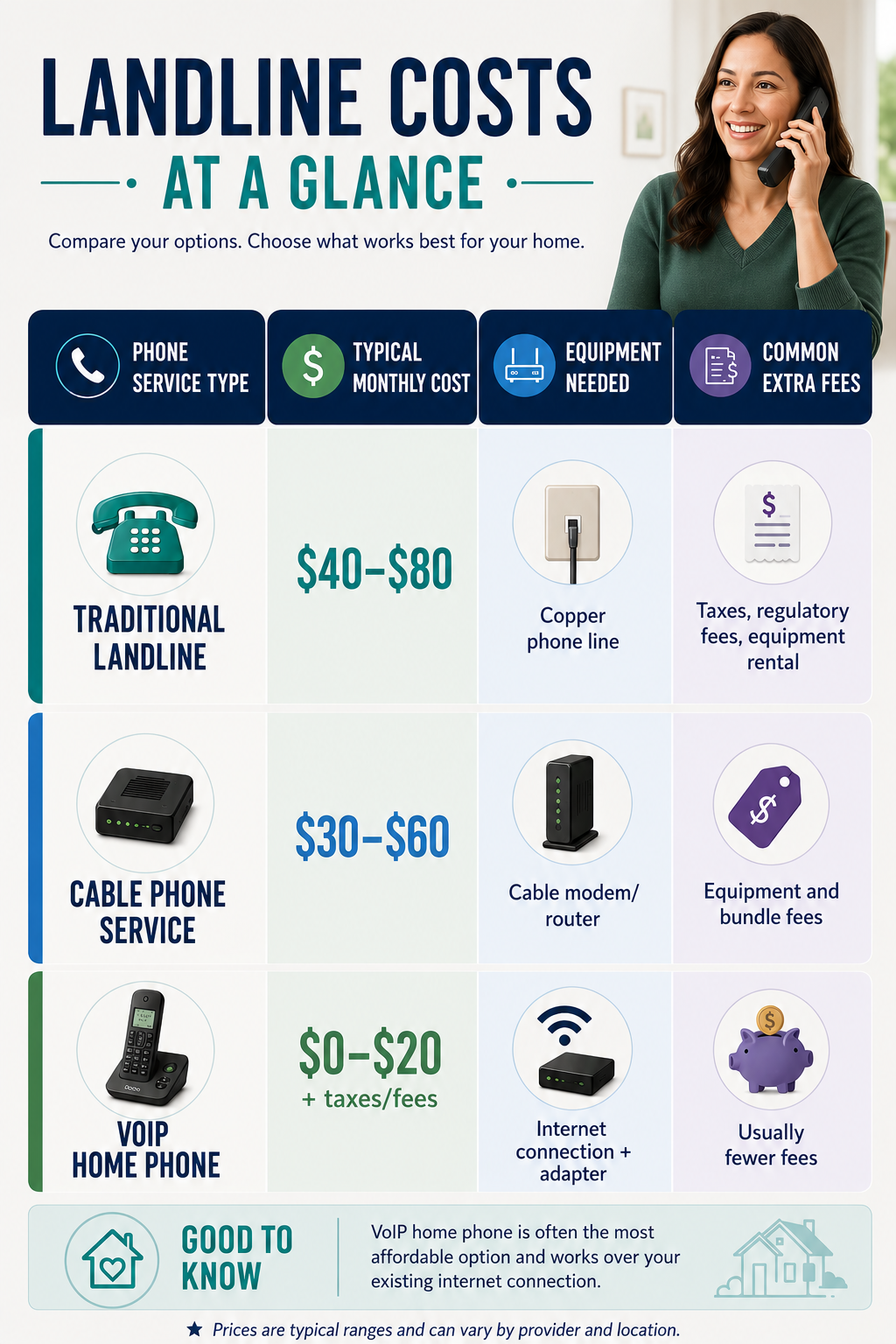
Landline costs at a glance
Why Traditional Landline Phone Service Is Expensive
Many people assume their landline bill only reflects basic phone service. In reality, several separate costs are often included.
Common Charges Included in a Landline Bill
| Common Charge | Typical Cost | What It Covers |
|---|---|---|
| Base phone service | $20–$50 | Local calling access |
| Regulatory recovery fees | $5–$15 | Telecom compliance costs |
| Taxes and surcharges | $5–$20 | Federal, state, and local telecom taxes |
| Equipment rental | $5–$15 | Modems or provider-owned hardware |
| Long-distance calling | Variable | Out-of-area calling charges |
Even plans advertised at a low monthly rate can become much more expensive once fees and surcharges are added.
Why Landline Costs Keep Increasing
Several industry trends have contributed to rising landline costs over the past decade.
Aging Copper Infrastructure
Traditional landlines rely on copper-wire networks that require ongoing maintenance and repairs. Telecom groups report that copper-based networks are becoming more difficult and costly to maintain as components become obsolete and infrastructure faces increased theft and vandalism risks. As those networks age, operating costs continue to rise.
Fewer Landline Customers
Millions of households have already switched to mobile phones or internet-based calling. According to the CDC’s National Health Interview Survey, more than 75% of U.S. adults now live in wireless-only households”, reflecting the long-term decline of traditional landline usage. With fewer customers remaining, telecom providers must spread infrastructure costs across a shrinking subscriber base.
Carrier Migration Away From POTS
Many telecom companies are gradually moving away from traditional POTS service in favor of internet-based communication systems. Industry estimates show traditional POTS (Plain Old Telephone Service) lines in the U.S. declined from approximately 192 million connections in 2000 to about 36 million by 2021. In some regions, providers have reduced investment in legacy phone infrastructure altogether.
What Is VoIP Home Phone Service?
VoIP stands for Voice over Internet Protocol.
Instead of using copper telephone lines, VoIP uses an internet connection to make and receive phone calls. Modern VoIP systems are designed to work with standard home telephones, cordless phones, and mobile devices.
Services like Ooma allow households to keep a familiar home phone experience while reducing many of the costs associated with traditional landlines.
How Much Cheaper Is VoIP Than a Traditional Landline?
VoIP services are often significantly less expensive because they do not rely on legacy copper infrastructure.
Traditional Landline vs VoIP Comparison
| Feature | Traditional Landline | VoIP Home Phone |
|---|---|---|
| Uses copper phone lines | Yes | No |
| Requires internet | No | Yes |
| Typical monthly cost | Higher | Lower |
| Hidden fees | Often | Usually fewer |
| Long-distance charges | Common | Often included |
| Mobile app support | Rare | Often available |
| Number portability | Sometimes | Usually available |
Some VoIP providers offer plans with little or no monthly service cost beyond taxes and fees after the initial hardware purchase.
Example: Traditional Landline vs VoIP Annual Costs
A household paying:
- $50/month for traditional landline service
- $12/month in taxes and regulatory fees
- $8/month in equipment charges
This household could spend more than $800 annually on home phone service.
By comparison, a VoIP-based home phone system may reduce those recurring costs substantially, especially for households that already have internet service. This household would save roughly $446 per year by switching to VoIP, according to Ooma’s savings calculator.
Potential Advantages of VoIP Home Phone Service
Many households switch to VoIP because of:
- Lower monthly costs
- Unlimited nationwide calling
- Caller ID and voicemail features
- Mobile app access
- Ability to keep an existing phone number
- Reduced equipment and maintenance costs
Some services also include advanced features such as spam call blocking, voicemail transcription, and multi-device ringing.
Potential Drawbacks of VoIP
VoIP may not be ideal for every household.
Possible limitations include:
- Requires an internet connection
- Call quality depends on network stability
- May require battery backup during power outages
- Emergency calling behavior can differ from traditional landlines
However, many modern VoIP providers include backup options, enhanced 911 support, and mobile app functionality to improve reliability.
Can You Keep Your Existing Home Phone Number?
In many cases, yes.
Most VoIP providers allow users to port an existing landline phone number when switching services. This helps households keep a familiar home phone number without remaining tied to expensive traditional phone service.
Alternatives to Traditional Landlines
Households considering a switch from traditional phone service typically choose between several options.
Cellular Home Phone Systems use wireless devices that connect home phones to cellular networks instead of copper phone lines. Their primary advantage is that they can work without a wired internet connection and are often simple to install. However, call quality and reliability may vary depending on local cellular coverage and signal strength.
Cable Phone Service provides phone service through a cable and internet provider, often as part of a bundled package with TV and broadband service. The main advantage is convenience since households can combine multiple services under one provider. The primary drawback is that monthly pricing can increase substantially after introductory promotional rates expire.
VoIP Home Phone uses an internet connection to deliver phone service while allowing households to keep a traditional home phone experience. Its biggest advantage is typically lower monthly costs combined with modern features like mobile apps, voicemail transcription, and unlimited calling. The primary drawback is that service depends on a stable internet connection and may require battery backup during power outages.
Wireless Internet Phone Adapters allow existing home telephones to work over an internet connection using a small adapter device. Their main advantage is that households can continue using their current cordless or wired phones without major equipment changes. The primary drawback is that setup, compatibility, and call performance can vary depending on the internet provider and home network quality.
The Bottom Line
Traditional landline phone service has become increasingly expensive due to aging infrastructure, shrinking subscriber bases, and rising maintenance costs. Legacy telecom providers are relying on consumers to foot the increasing bills, making having a traditional landline service frustrating.
For households that still want a reliable home phone, internet-based alternatives such as VoIP can provide a familiar experience with lower monthly costs and modern calling features.
Services like Ooma are designed to help households keep the convenience of a home phone while avoiding many of the high costs associated with traditional landline service.
Frequently Asked Questions About Landline Costs
Why are landline phones so expensive?
Traditional landlines rely on aging copper-wire infrastructure that is expensive to maintain. Monthly bills also often include taxes, equipment rental fees, and regulatory surcharges.
Is VoIP cheaper than a traditional landline?
In many cases, yes. VoIP services typically have lower operating costs because they use internet connections instead of legacy phone infrastructure.
Are traditional landlines being discontinued?
Some telecom providers are gradually reducing support for traditional copper-line phone services as internet-based communication becomes more common.
Can I keep my home phone number if I switch?
Most VoIP providers allow number porting, which lets customers keep their existing home phone number.
Does VoIP work with cordless phones?
Yes. Many VoIP systems work with standard cordless and wired home telephones.
Do traditional landlines still work during power outages?
Some traditional copper-line systems can continue working during outages. VoIP systems may require battery backup if internet or electricity service is interrupted.
What is the cheapest way to keep a home phone?
For many households, VoIP home phone service offers one of the most affordable ways to maintain a home phone number.
Alicia Kalnawat, brand marketing manager at Ooma, is an experienced marketing professional driving successful multi-channel campaigns, product launches and creative strategy. She joined Ooma in 2022, bringing hands-on experience from the commercial real estate and insurance industries.