How to help your shy child find their voice without changing who they are
 | October 12, 2026 | 11 min read |
Key Points
- Quiet kids don’t need to be outgoing, just able to speak up when it counts.
- Build confidence step by step, starting with easy tasks like ordering dinner and working up to raising a hand in class.
- Give kids simple scripts in advance and wait a few seconds before answering for them.
- Phone calls with family are low-pressure practice for greetings, questions and ending a conversation.
- Talk to a professional if fear keeps a child from speaking at school or asking for help.
I grew up as a shy kid in a family of extroverts. My mother spent hours on the phone every day and my sisters looked forward to chatting with their friends about whatever was on their minds. They could chat for hours and didn’t seem to struggle to find things to gab about. On the other hand, I had a strong aversion to phone calls for years. When holidays and birthdays arrived, the phone would begin ringing with calls from relatives and I would begin hoping someone else would answer or take over the conversations for me.
It wasn’t that I didn’t love the people calling. I simply worried that I wouldn’t know what to say. What if the conversation went quiet? If I couldn’t see their faces, I didn’t know how they were reacting to what I said. What if they asked a question I didn’t know how to answer? How was I supposed to keep the conversation going after “thank you for the birthday present” or “school is good”?
To an outgoing adult, a short phone call might seem easy. To a shy child, it can feel like being handed a microphone without knowing the script.
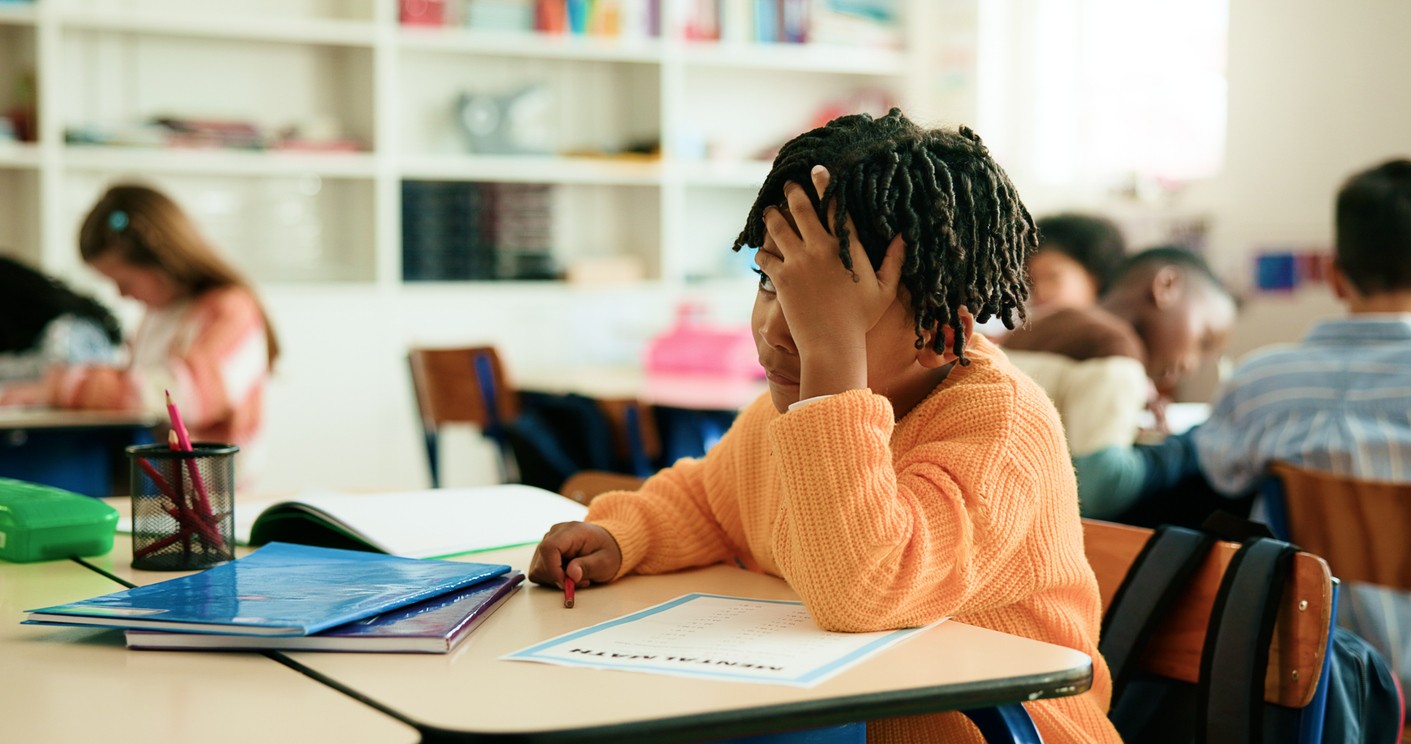
Many parents recognize that hesitation in their own children. They see a child who has wonderful ideas at home but rarely raises a hand in class. A child who wants to make friends but struggles to introduce themselves. Or a child who happily talks with a parent and siblings but freezes when Grandma calls.
The answer is not to try to turn that child into a social butterfly. Quiet children do not need to become the loudest people in the room. They need opportunities to build the skills and confidence to communicate when their ideas, needs, boundaries or safety matter.
Shyness is not a flaw to fix
Children are quiet for different reasons. Some enjoy observing before joining. Some need extra time to feel comfortable with unfamiliar people. Some know what they want to say but have trouble finding the words under pressure. Others worry about making a mistake or attracting attention.
The American Academy of Pediatrics notes that many shy children are naturally withdrawn or slow to warm up. Most do well socially once they have had time to adjust. That means a child’s quietness is not necessarily a problem and it is not evidence that a parent has done something wrong. The goal is to understand the individual child, not force every child toward the same outgoing ideal.
Parents can begin with a simple question after a difficult interaction:
“Did you want to say something but feel stuck, or were you comfortable listening?”
The answer matters. There is a meaningful difference between a child who prefers not to speak and a child who wants to speak but feels unable to or uncomfortable doing so.
Finding your voice also doesn’t have to mean speaking loudly or frequently. It can mean asking a teacher for help, telling a friend to stop, ordering a meal, sharing an opinion or story, calling a grandparent or knowing how to reach a trusted adult in an emergency.
The goal should be helping your child understand that their voice matters, even if the conversation is a little clunky. But also helping them to know what to say in important moments.
Treat speaking up as a skill
For an outgoing adult, conversation may feel spontaneous. For a shy child, it can involve several skills at once: deciding what to say, finding an opening, predicting how the other person will respond and managing the uncomfortable feeling of being noticed.
Those skills develop over time. The American Speech-Language-Hearing Association describes the school-age years as a period when children refine conversational turn-taking, express opinions, persuade others and learn to repair misunderstandings. In other words, confident communication is something children develop, not something they either naturally possess or lack.
That was certainly true for me. The phrase “Just go talk to them” was never especially helpful because talking was the very thing I didn’t yet feel confident doing. I needed smaller steps and some words to help me get things started.
Build a speak-up staircase
Instead of beginning with the situation that scares a child most, create a series of increasingly challenging opportunities to practice. The Child Mind Institute calls this kind of gradual approach “brave talking”: children begin with manageable steps and work toward harder interactions as their confidence grows.
A speak-up staircase might look like this:
- Tell a parent what you want for dinner.
- Leave a short voicemail for a grandparent.
- Call a familiar relative to share one piece of news.
- Ask a store employee where to find something.
- Order your own food at a restaurant.
- Ask a teacher a question privately.
- Contribute one idea in a small group.
- Raise your hand in class.
The right order will be different for every child. Let your child rate situations from “a little uncomfortable” to “very hard,” and choose a step that feels challenging but possible. The aim is not a perfectly smooth performance but a chance to give your child repeated and low-stakes evidence that they can feel nervous and still communicate.
Celebrate the attempt rather than the volume or length of the response:
- “You asked for help even though you felt nervous.”
- “I noticed that you told your friend what you wanted.”
- “You made the call yourself and remembered your opening.”
- “Your voice was quiet, but your message was clear.”
Give kids the words before they need them
One reason those birthday calls felt so intimidating was that I believed I had to invent an entire conversation in real time. A simple script would have made the call feel far more manageable.
Parents can role-play common situations and help children prepare a few phrases in advance.
At school:
- “Could you explain that one more time?”
- “I have an idea.”
- “Can I talk to you after class?”
- “I need help with this part.”
With other children:
- “Can I play too?”
- “I’m still using that.”
- “I don’t like that. Please stop.”
- “Do you want to sit with me?”
On the phone:
- “Hi, this is ____. I called to tell you about ____.”
- “What have you been doing today?”
- “Could you say that again, please?”
- “I need to go now. It was nice talking to you.”
In public:
- “I would like ____.”
- “Excuse me, where can I find ____?”
- “No, thank you.”
- “I’m separated from my parent. Can you help me?”
Role-playing reduces the number of things a child has to figure out while already feeling nervous. Understood recommends practicing specific situations and scripts as a way to help shy children build self-advocacy skills.
For those family birthday calls, a child might keep three prompts nearby:
- Say thank you or share one piece of news.
- Ask the caller one question.
- Use a prepared closing.
Suddenly, there is a beginning, a middle and an end to the conversation and your child isn’t responsible for somehow keeping a conversation alive forever.
Pause before speaking for your child
Silence can feel uncomfortable for adults. When a server, teacher or relative asks a quiet child a question, a parent may answer quickly to rescue the situation and avoid the inevitable awkward pause.
But that pause may be exactly what is needed. Try waiting several seconds without repeating the question or answering. Look encouraging rather than alarmed. If the question is broad, make it easier to answer without taking over.
Instead of saying, “She wants chocolate,” try, “Would you like to tell them whether you want chocolate or vanilla?”
Instead of saying, “He’s too shy to order,” try, “He’s not ready to choose.”
This is also why it helps to avoid repeatedly describing a child as “the shy one.” A label can begin to feel like a permanent role. Describe the moment instead: “She needs a little time to warm up,” or “He isn’t ready to answer yet.”
For children with significant difficulty speaking in certain settings, the Child Mind Institute recommends allowing about five seconds for a response, using specific praise and offering choices that encourage a verbal answer. The organization also emphasizes that children experiencing selective mutism should not be pushed or shamed into speaking. Support should be gradual and matched to the child.
Use phone calls as a lower-pressure practice space
Phone conversations can be challenging because children cannot rely on facial expressions or gestures. That said, there is a little bit of freedom in not having too many types of sensory input. This makes talking on a phone a useful middle step between talking comfortably at home and speaking face-to-face outside of it. A child can practice greetings, turn-taking, asking questions and ending a conversation without also navigating eye contact, a new setting or a busy and distracting room.
There is even research suggesting that hearing a familiar voice carries something text does not. In a small study of 64 girls ages 7 to 12 who completed a stressful task, those who spoke with their mothers in person or by phone showed different stress-related hormonal responses than those who communicated through instant messages. The study was small and limited to girls, but it offers an interesting reminder: the sound of a trusted person’s voice may itself be reassuring.
Other research, conducted primarily with adults, found that voice-based conversations created stronger feelings of connection than text exchanges without producing the additional awkwardness participants expected. We may dread a conversation more than the conversation deserves.
That description feels familiar. As a child, the ringing phone represented uncertainty: What would I say? How long would I have to talk? As an adult, I can see that those short family calls were also a safe place to learn. The people on the other end already cared about me. I wasn’t being graded on my conversational performance.
Parents can create the same kind of low-pressure practice:
- Leave a prepared voicemail for Grandma.
- Call a cousin to ask one specific question.
- Tell a trusted adult one thing that happened that day.
- Practice answering with a greeting and the child’s name.
- Write down three conversation prompts before making a call.
- Begin with a parent nearby, then gradually give the child more independence.
A simple home phone such as MyPhone can give children a dedicated way to practice those skills without the distractions of social media or the wider internet. Parents choose the family members and friends in the child’s Trusted Circle, creating a familiar group for early conversations. Voicemail lets a child rehearse a message before trying a live exchange, while Party Line can provide a bridge from talking with one trusted person to joining a small group.
Partner with teachers without putting a child on the spot
School often presents the biggest communication leap: more people, less control and a greater fear of being wrong in public. Parents can work with teachers to make that leap more manageable.
Depending on the child, a teacher might:
- Let the child share an answer privately before contributing to the class.
- Give advance notice that the child will be invited to answer.
- Begin with a trusted partner or small group.
- Establish a discreet way for the child to ask for help.
- Identify one trusted adult the child can approach.
- Recognize small attempts without turning them into a public event.
Avoid surprise demands to perform or enthusiastic announcements such as, “Look who finally decided to talk!” Even positive attention can make a self-conscious child less willing to try again.
You can also ask your child when speaking up feels most comfortable and set some small goals they can work on in that space. Something like “Ask one question this week during social studies” is more useful than “Talk more in class.”
Know when a child may need more support
Shyness and introversion are not mental-health conditions. Still, difficulty speaking can sometimes be a sign of anxiety that deserves professional attention.
According to the CDC, 11 percent of U.S. children ages 3 to 17 had current, diagnosed anxiety in 2023–2024. On top of that, according to the National Institutes of Health roughly 4.7 percent of children and 8.3 percent of adolescents aged 13 to 18 have social anxiety. Those numbers don’t mean that children are simply shy, but that parents should pay attention when fear consistently prevents a child from doing things they want or need to do.
Consider talking with a pediatrician, school counselor or qualified mental-health professional if a child:
- Speaks comfortably at home but consistently cannot speak at school or around particular people.
- Cannot ask for essential help or communicate a safety need.
- Avoids activities they genuinely want to join.
- Experiences intense physical distress around speaking.
- Is becoming increasingly isolated.
- Is significantly affected academically or socially.
The National Institute of Mental Health describes social anxiety as more than ordinary shyness: it involves a persistent fear of being judged that interferes with everyday life. Selective mutism is also an anxiety disorder. A child experiencing it is unable—not stubbornly refusing—to speak in particular settings.
Seeking guidance does not mean trying to change the child’s personality. It means giving them support when fear is getting in the way of their choices.
A quiet voice still deserves to be heard
I never became the loudest person in my extroverted family. I still prefer meaningful one-on-one conversations to working a crowded room, and I still appreciate knowing why someone is calling before I answer the phone.
But over time, the calls that once filled me with dread became less mysterious. I learned how to ask a follow-up question. I learned that a brief pause did not mean I had failed. I learned how to bring a conversation to a kind and natural close. Most importantly, I learned that confidence did not require becoming a different kind of person.
That is the opportunity parents can give a shy or introverted child: not pressure to perform, but words to use, small places to practice and the confidence that what they have to say is worth hearing.
Megan Green, Senior SXO Manager at Ooma, Inc., has been tackling the broad spectrum of SEO, testing and user experience work on the Ooma website since joining the team in 2023. With nearly two decades of SEO experience across a wide range of industries, Megan is passionate about elevating helpful website content to people looking for it in search engines.