From dorms to stadiums: Creating a unified communications backbone for safety
 | September 16, 2026 | 7 min read |
Key Points
- Campus safety systems depend on reliable connectivity across life safety, security, operations and business continuity.
- Fragmented POTS, cellular and IP connections can create inconsistent monitoring, maintenance and points of failure.
- Ooma AirDial can modernize connectivity for existing analog devices without requiring replacement of the connected equipment.
- MultiPath technology uses LTE and wired Ethernet simultaneously, while battery backup helps maintain service during power outages.
- The Remote Device Management Portal provides centralized monitoring and alerts for AirDial units across a campus.

Our expectations for staying in touch have evolved towards always-on connectivity. Smartphones, for instance, can use local cell phone service or Wi-Fi calling, giving us alternatives when one network isn’t available. Yet the systems responsible for keeping people and property safe haven’t always kept pace.
Fire alarms, elevator phones, security cameras, blue light safety phones, security entrance systems and emergency call boxes may each have their own requirements, codes and standards, but they share a common dependency: a reliable way to communicate when it matters most.
For many campuses, that infrastructure is a patchwork of aging POTS lines, cellular connections and IP-based systems installed at different times. Managing that mix can make it hard to monitor infrastructure, address points of failure and ensure critical systems have the resilience they need.
This guide breaks down campus safety infrastructure layer by layer, giving you a practical checklist for auditing the connectivity behind each one. Along the way, we’ll also look at why fragmented connectivity has become a real risk and what a more unified approach can look like.
Layer 1: Life safety
Life safety systems are the first layer to audit because they have the highest stakes. When an emergency happens, these systems need to communicate immediately and reliably, whether that means sending an alarm signal or connecting someone to emergency assistance.
Fire alarms are a good example. These systems typically rely on one of two pathways:
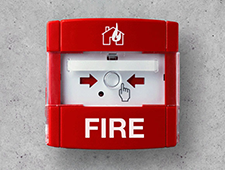
Digital Alarm Communicator Transmitter (DACT): The traditional approach, which sends alarm signals over a POTS line.
Internet Protocol (IP) communicator: A newer approach that sends signals over a data network.
NFPA has recognized IP as a valid pathway for years, but plenty of buildings still lean on DACTs and copper lines. That makes the connection itself an important part of any fire alarm audit.
Elevator phones also fall in this category. The American Society of Mechanical Engineers (ASME) expanded its safety code for elevators and escalators (ASME A17.1) in 2019 and 2022 to require resilient, uninterrupted two-way voice, video and text communication, along with visual messaging for passengers who are deaf or hard of hearing.
Area of refuge stations and emergency call boxes round out this layer. They may be used less frequently, but that makes reliability even more important. When someone finally presses that button, the connection behind it needs to work the first time.
Layer 2: Security
Security systems are designed to detect threats, control access and give teams the information they need to respond. But none of that matters if the systems can’t reliably communicate.
For instance, access control systems, whether they’re managing dorm entry, hospital wings or corporate badge readers, depend on a live connection to verify credentials and log activity in real time. If that connection drops, you could find yourself with a door building entry system offline, leaving doors unable to lock or open as intended, either of which can be disastrous.
Security cameras pose another risk. A camera can be powered on and recording locally while still failing to transmit footage where it’s needed. During an active incident, that gap can leave security teams without a live view of what’s happening.
Burglar alarms, meanwhile, still commonly report through the same aging phone lines used for decades. If that line goes down quietly, a panel can look armed and functional while it’s actually reporting nothing at all. Checking the strength and reliability of these connections should be an ongoing part of keeping security systems trustworthy.
Layer 3: Operations
Operational systems play an important role in preventing problems before they become emergencies. Their value depends on being able to detect an issue, communicate it to the right people and give facilities teams time to act.
HVAC monitoring keeps facilities teams aware of temperature and airflow issues before they become health or comfort problems, particularly in spaces like server rooms or hospital wings where conditions need to stay within a narrow range.
Boiler monitoring works the same way, flagging pressure or temperature anomalies before they turn into larger equipment or safety issues.
Environmental sensors, tracking everything from humidity to water leaks to air quality, are also only useful if their alerts actually reach someone in time. A sensor that detects a problem but can’t report it is no better than no sensor at all.
Building management systems (BMS) bring many of these functions together, which makes their connectivity especially important. A single connection failure can affect multiple systems at once, limiting visibility across the building and making it harder for facilities teams to spot and respond to problems.
Layer 4: Business continuity
The systems in this layer may not directly protect people in an emergency, but they keep a campus running when everything else is business as usual. When one of these connections fails, the impact can quickly spread from a minor inconvenience to a larger operational disruption. Key systems to consider include:
Fax lines still handle sensitive transactions in healthcare and administrative offices, often for compliance reasons that haven’t caught up to newer technology.
POS backup lines keep transactions moving when a primary payment connection drops.
Dispatch phones keep security and operations teams coordinated in real time, making a reliable connection essential for critical communication.
Office phone systems keep staff connected for everything from sales calls and billing inquiries to coordinating patient care. A failure here can quickly become a productivity and service problem.
While these systems might not carry the same stakes as a fire alarm or a security breach, they still play a critical role in keeping the campus operational. A fragmented or unreliable connection across them can add up to significant cost and disruption.
The fragmented connectivity problem
Each system in these four layers may have been installed at different times, by different vendors, for different reasons. That means the connections behind them can be just as varied, relying on a mix of copper POTS lines, cellular and IP-based connections, even within the same building.
That patchwork makes consistent reliability harder to achieve. Each connection can have its own maintenance requirements, points of failure and level of visibility into whether it’s actually working. A failure can go unnoticed until the moment a critical system needs to communicate.
Copper lines, in particular, are cause for concern. The FCC has noted that these legacy networks, built to carry voice in the 19th century, are costly to maintain and harder to repair as time goes on. They’re also less reliable in extreme weather, which is exactly when these systems need to work. On top of that, carriers are actively retiring copper lines, making the connections that rely on them less dependable by the day.
Meanwhile, newer systems continue to be built on modern infrastructure. The result is a campus where old and new connections coexist, creating a fragmented communications backbone that’s harder to manage and make consistently resilient.
Ooma AirDial: A more unified approach to connectivity
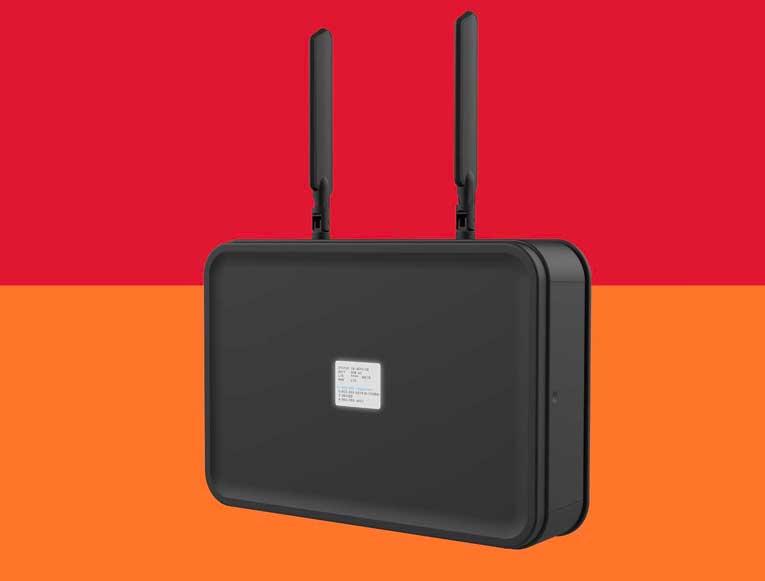
Ooma AirDial® offers a way to modernize the infrastructure behind your existing systems without replacing the equipment itself. As a POTS line replacement, AirDial lets you keep the devices you already have, including fire alarms, elevator phones and POS systems, while replacing the aging copper connection they rely on with a modern, reliable connection.
AirDial is designed to address the reliability and visibility challenges that come with legacy POTS infrastructure:
Redundant by design: Patented MultiPath technology routes traffic over both LTE and wired Ethernet at the same time, so a single point of failure doesn’t take a system offline.
Protected against outages: Battery backup keeps systems running even when the power doesn’t.
Full visibility: Our Remote Device Management Portal lets you monitor every AirDial unit across a campus, with alerts for outages, low battery and specific numbers dialed.
Secure and compliant: AirDial is MFVN-compliant, meaning traffic never touches the public internet, and it’s certified by ASME, NFPA and other relevant compliance organizations.
If you’re receiving notices about carrier network modernization, now’s a good time to take stock of the POTS lines across your campus and what depends on them. Replacing aging lines is increasingly important as carriers retire legacy copper infrastructure, but it doesn’t mean you need to replace the equipment connected to those lines.
With AirDial, you can modernize the communications infrastructure behind your critical systems without a costly, disruptive overhaul. The result is a more unified approach to connectivity that’s easier to monitor and maintain.
Build a more reliable communications backbone
Campus safety depends on having a reliable connection behind every alarm, phone, camera and access point. Ooma AirDial helps you modernize that connectivity without replacing the equipment you already have.
By replacing aging POTS lines, you can save 60 percent or more on your monthly phone bill while avoiding the rising costs of legacy infrastructure. Plus, deployment is flexible: you can install it yourself or have us handle the process for you.
Want to see what replacing your POTS lines could save you? Create a custom business case with savings estimates tailored to your current lines and monthly costs. You’ll get estimated savings, ROI and payback period, all in a polished report you can share with stakeholders.

We’ll follow up within a business day.

We’ll help you analyze whether Ooma AirDial is a good solution for your needs.

A custom quote will be generated.
Tonya Hottmann is the director of marketing for Ooma AirDial. She has 20 years of experience in demand generation, growth marketing and product launches, including 10 years in the telecommunications industry.



Still using POTS lines?
See where they still support critical systems.
Call sales at:
866-902-6765
Thank you!
An Ooma AirDial Sales Representative will be in touch shortly.
866-839-5810



Check your POTS Line Readiness
Download the checklist to review your active POTS lines and connected systems.