Home emergency preparedness: Save precious minutes with a home phone
 | April 26, 2026 | 5 min read |
Key Points
- Emergency plans often fail at the communication step—reliable 911 access is critical, not just supplies or escape routes.
- Cell phones are unreliable in emergencies (battery, network congestion, or imprecise location data).
- VoIP home phones with E911 provide instant, exact address data to responders, reducing response time.
- Small optimizations (central phone location, user training, updated E911 address) materially improve emergency outcomes.
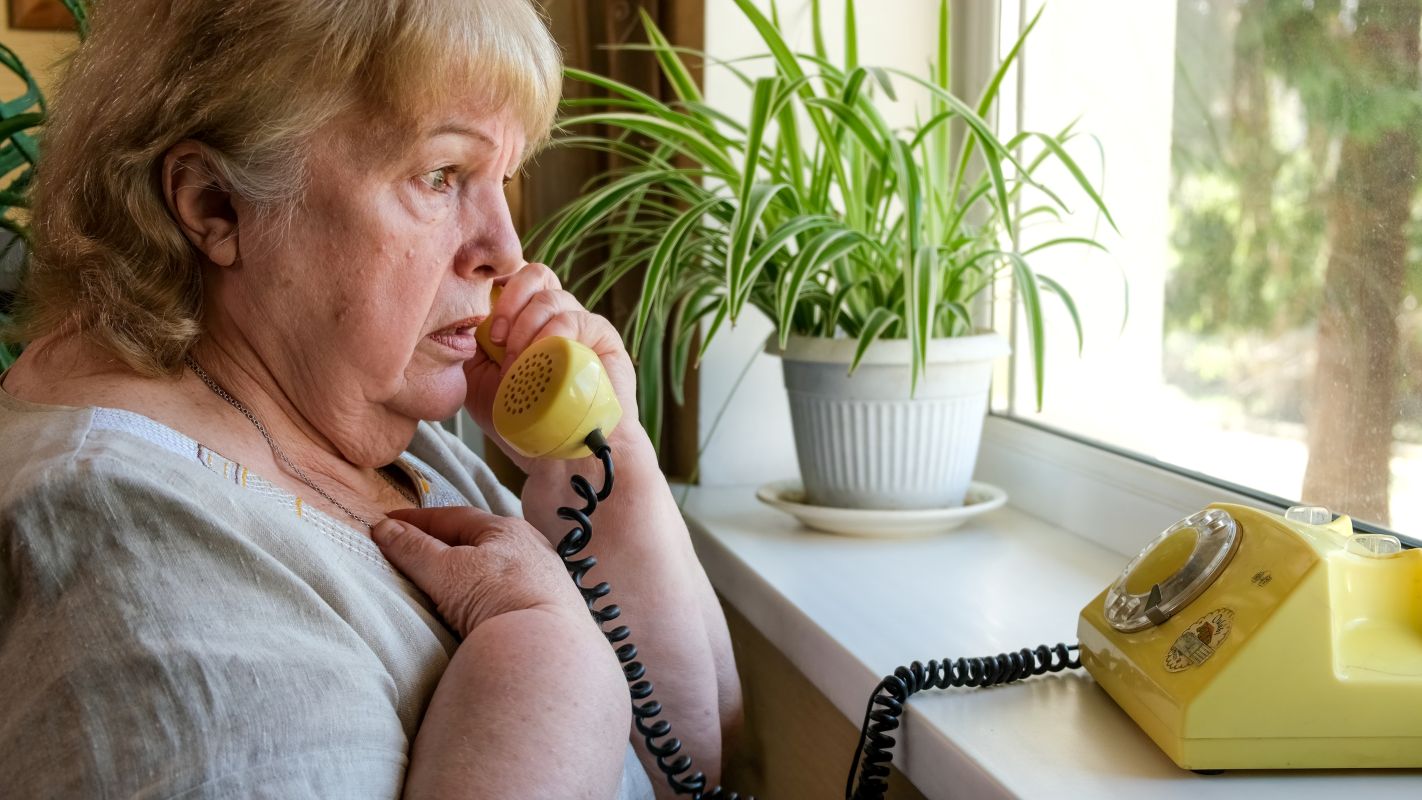
You think you’re prepared… until something actually happens. Most emergency plans fail the moment you need them, and if you’re caught unprepared, panic and confusion translate to time lost trying to communicate your location. The right emergency preparedness plan incorporates a home phone with E911, a critical tool that will save you minutes when they matter most. The following explains why a home phone with E911 should be part of your emergency plan.
What is emergency preparedness?
Emergency preparedness means that you and those living with you have a detailed plan in place for situations such as:
- Tornadoes
- Hurricanes
- Earthquakes
- Tsunamis
- Flooding
- Fire
- Winter storms
- Power outages
- Medical emergencies
Having an emergency plan means everyone you live with is on the same page. You all know where supplies are, like in the basement. You have escape routes mapped out of your home, such as a fire escape from second-story windows. And you know where to meet if evacuated, such as the elementary school around the corner. You should also all agree on the same person to contact when you need help and know how to reach them. This type of proactive planning helps you with disaster preparedness, calamity preparedness and emergency situations. It minimizes the damage and helps you recover faster if something does happen.
Where emergency plans fail
Emergency preparedness is a great proactive tool and can significantly help you during a disaster, but one thing most family emergency plans fail to address is how to actually call emergency services if needed. It all comes down to the phone you use in your disaster preparedness plan.
Most people assume you’ll call emergency services with a mobile phone. But what if cell phone towers are out or overwhelmed, your wireless phone runs out of battery, or you can’t find your cell phone? Several things can go wrong when relying on a mobile device in emergencies.
If you do plan to use a cell phone, don’t assume it will communicate your precise location with emergency responders. Surprisingly, that’s not always the case. This poses a problem if you call 911 but can’t speak, or a child calls emergency services and doesn’t know your address. Enter a VoIP home phone service with E911.
A reliable home phone for your emergency plan
A reliable home phone saves time and uncertainty right off the bat. For one thing, it’s easier to locate. Everyone in the house should know where the home phone is located. There’s also no PIN or access code required to use a home phone. Kids and guests alike can pick it up and immediately dial. It also has a more reliable power source, and with an E911 address, location information is already in the system if you can’t communicate your address. Ooma offers a VoIP home phone service with address-based E911 built in. This means first responders can find you and help you faster in an emergency.
What is E911?
So, what is E911? It stands for Enhanced 911. In this version, first responders can see your exact location and callback number on their screen when you call in. This means even if you can’t speak to share your address, they have it and can get to you faster. But not all E911 is created equal.
911 vs. E911
Approximately 240 million calls are made to 911 throughout the U.S. each year, and up to 80% of those calls come from cell phones. Most cell phones, too, have E911, but there are differences. Here they are:
911: By dialing 911, you’re connected to an emergency dispatcher who sends help to you. This service was created when only landlines existed. Now with mobile phones, basic 911 doesn’t cut it. The operator might not know your exact location and must rely on you to tell them.
E911 and mobile phones: With the rise of mobile phones came a new obstacle for 911 emergency services. You could call 911 from anywhere, and the emergency response wouldn’t know where to find you. They needed a way to have automatic number identification (ANI) and automatic location identification (ALI). This is enhanced 911. In 1999, the Wireless Communications and Public Safety Act—also known as the 911 Act—established phases to implement E911 into all phones, including mobile devices.
While E911 is now widely available and basically universal, the difference comes down to how fast your location can be pinpointed. Wireless phones are required to meet location accuracy standards, but they don’t always pinpoint an exact address. Factors like signal strength, building interference and GPS availability affect how quickly and precisely your location is shared with emergency responders.
E911 and VoIP phones
Contrary to the myth, VoIP phone services like Ooma’s do enable 911 calls. Exact location services through E911 are required for VoIP phones and are included in Ooma’s VoIP home phone service. A home phone with E911 means that your precise location is linked to your phone number and is automatically shared with emergency responders when a call comes in from your number.
According to Butler County, Kansas, it can take up to 20 seconds for a dispatcher to identify your location when you call from a cell phone. This is because it has to use cellular towers to triangulate your location. The GPS coordinates it receives are the size of a football field. Because E911 and landline phones send the location instantly, we can assume that the time difference is around 20 seconds or so. Those 20 seconds can make a world of difference in some scenarios.
How to strengthen your home emergency plan
Take the following steps to strengthen your family emergency plan:
- Add a home phone to your arsenal
- Position your home phone in a central place where everyone knows where to find it
- Teach everyone in the home how to dial 911
- Post emergency contact numbers near the phone
Most importantly, it’s essential that you keep your current address up to date in the E911 system. You can do this through Ooma’s myOoma portal.
Small changes make a big difference
While you can’t predict an emergency, you can make your outcomes better by having an emergency preparedness plan. A home phone from Ooma that includes E911 address is a small step in that plan, but can make a big difference. It makes your emergency response faster, which is critical in an emergency. To learn more about the E911 emergency plan feature, contact Ooma today.


Designed with
safety in mind.

S
A
F
E
Husain Sumra is a former journalist who reported on the biggest companies in tech, from Apple to Amazon, covering cloud services, consumer technology and communication solutions. His journalism background has helped him bring a customer-first approach to content marketing, creating pieces of content aimed at helping people.