



On the brink: Why 2026 marks the point of no return for POTS lines
 | March 4, 2026 | 5 min read |
In a recent Ooma survey, many businesses that have not yet modernized their communications pointed to one main reason: they believe POTS lines are more reliable than digital alternatives.
That perception is understandable. Copper lines have been around for decades, and for many organizations they have simply “always worked.” But the reality is shifting quickly. As carriers continue to decommission copper infrastructure, relying on POTS lines introduces growing operational, financial, and compliance risks that are becoming harder to ignore.
The operational risk: Longer outages and fewer options
From an operational standpoint, POTS lines are becoming increasingly vulnerable to extended service disruptions. Repairs that once took hours can now take days as carriers reduce investment in copper networks and field support resources become more limited.
Even more concerning, POTS lines offer little to no built-in redundancy or failover. If a line goes down, the device connected to it is often offline until service is restored, creating a single point of failure for critical systems.
Visibility is another major issue. Most organizations have no easy way to monitor the health of their POTS connections. In many cases, the only way to confirm a line is still functioning is to physically visit each location and manually test each device, an approach that is time-consuming, inefficient, and unrealistic at scale.
The financial risk: Skyrocketing and unpredictable costs
The financial picture is equally troubling. The cost of maintaining POTS lines has risen dramatically, and pricing increases can be steep and sudden.
At Ooma, we have seen businesses experience month-over-month phone bill increases of up to 700%, often with little warning.
During phone audits, we consistently see several common patterns:
- Many organizations do not realize what they are truly paying. Phone bills often go unchecked for long periods of time, and when they are reviewed, the increases can be shocking.
- Businesses are frequently billed for lines that are no longer in use. Inactive or disconnected POTS lines can remain on invoices for months or even years, driving unnecessary costs.
- Some organizations discover the opposite problem: critical devices are not connected at all. In these cases, equipment may still be in service but not tied to an active line, creating serious life-safety and compliance exposure.
For many organizations, the financial risk is not just about higher costs. It is the unpredictability. When pricing changes are outside your control, budgeting becomes harder, and the long-term cost of “doing nothing” grows month after month.
The compliance and safety risk: the highest stakes of all
The most serious risks, however, are tied to safety and compliance.
Emergency communication systems such as fire alarm panels, elevator phones, and public safety phones must remain operational at all times. As copper infrastructure degrades and outages become more frequent, these systems become increasingly vulnerable to failed inspections, compliance violations, penalties, and potentially dangerous situations.
When the system involved supports fire detection, emergency response, or life-safety communications, “good enough” is not acceptable. Reliability is not optional.
Why waiting another year is the worst option
Many organizations recognize the need to move away from POTS lines, but still plan to delay action until 2027 or later. While that may feel like a reasonable timeline, postponing replacement often increases risk significantly.
As carriers continue sunsetting copper infrastructure, service disruptions and forced migrations may occur with limited notice. That can leave businesses scrambling to replace lines under tight deadlines, often while competing with many other organizations facing the same urgency.
In other words, delaying can put companies in the middle of a traffic jam of POTS replacement, where time and availability become limited.
Waiting also extends exposure to growing operational risk. The longer aging lines remain in service, the longer organizations face the potential for outages, compliance failures, and safety violations. In most cases, the best approach is a planned, structured deployment rather than a rushed response driven by a sudden outage or carrier shutdown.
A proactive plan reduces disruption, minimizes compliance exposure, and gives organizations control over the timing and rollout.
The path forward: taking a proactive approach to modernization
For property owners and facility managers, replacing POTS lines can feel overwhelming at first. These lines often support fire alarm panels, elevator emergency phones, gate entry systems, and other life-safety devices across multiple buildings. In many cases, they have been layered in over years of renovations and expansions, and documentation is not always complete. The good news is that modernization does not typically require replacing the devices themselves. In most cases, existing fire and safety equipment can remain in place while the aging copper connectivity behind it is upgraded. The key is approaching the transition proactively, before an outage or carrier shutdown forces a rushed decision.
Step 1: gain visibility across your portfolio
Before making any changes, it is important to understand where POTS lines exist and what they support. Reviewing recent phone bills and building a simple inventory often reveals surprises, including lines that are still being billed but no longer connected to active devices, or critical systems that are not clearly documented. Establishing this visibility creates a foundation for smarter planning, helps reduce unnecessary costs, and ensures no life-safety devices are overlooked.
Step 2: prioritize life-safety and compliance-critical systems
Once you have a clear inventory, focus first on systems with the highest compliance and safety impact, such as fire alarm panels, elevator phones, and area-of-refuge communication systems. These devices are tied directly to inspections and building codes, and they face the greatest risk as copper infrastructure continues to degrade. Prioritizing them first helps reduce exposure quickly while supporting ongoing compliance requirements.
Step 3: choose a solution built for reliability and oversight
Modern POTS replacement solutions provide more than basic connectivity. Many offer real-time monitoring and centralized visibility into device status, reducing the need for manual testing at each location. Built-in redundancy, often using both wired Ethernet and LTE, helps keep critical communications operational even if one connection fails, while routing through a Managed Facilities Voice Network can help keep traffic secure by avoiding the public internet. Solutions designed for this purpose are also built to support key compliance standards such as NFPA 72 and ASME A17.1.
Step 4: implement in phases to stay in control
For portfolios with multiple buildings, a phased rollout is often the most practical approach. Rather than waiting for a carrier shutdown or emergency outage to force action, property owners can start with buildings where copper service is unstable, costs have increased sharply, or timelines are already uncertain. A phased plan spreads investment over time, reduces disruption, and allows teams to modernize at a manageable pace while steadily reducing operational and compliance risk.
Modernization is not just replacement, it is risk reduction
Replacing POTS lines is not simply about removing copper. For property owners and managers, it is about strengthening critical communications in a way that supports long-term business continuity.
Modern POTS replacement solutions help organizations reduce risk by delivering:
- Greater reliability through redundancy
- Improved compliance support for life-safety systems
- Real-time visibility into device status
- Secure routing that avoids the public internet
- Predictable, manageable costs
For organizations managing critical communications systems, the risk isn’t transitioning away from POTS. The real risk is waiting until aging infrastructure and service disruptions make the decision unavoidable.

We’ll follow up within a business day.

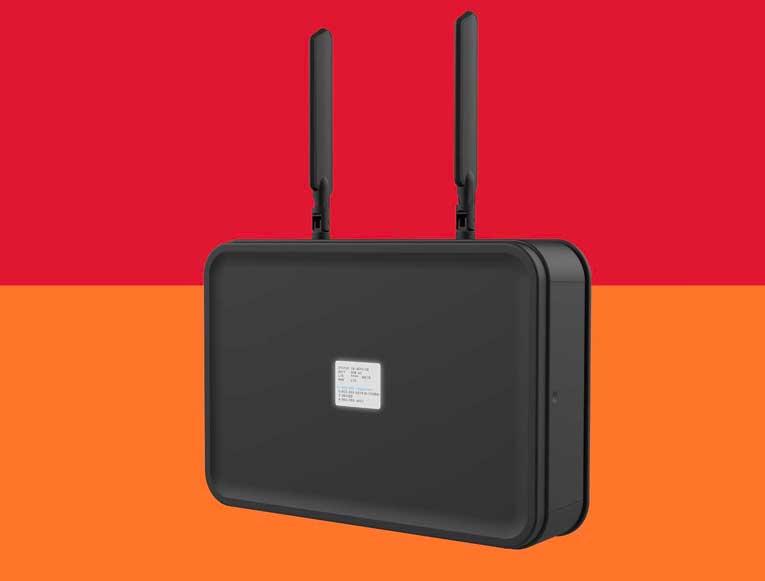
We’ll help you analyze whether Ooma AirDial is a good solution for your needs.

A custom quote will be generated.
Tonya Hottmann is the director of marketing for Ooma AirDial. She has 20 years of experience in demand generation, growth marketing and product launches, including 10 years in the telecommunications industry.